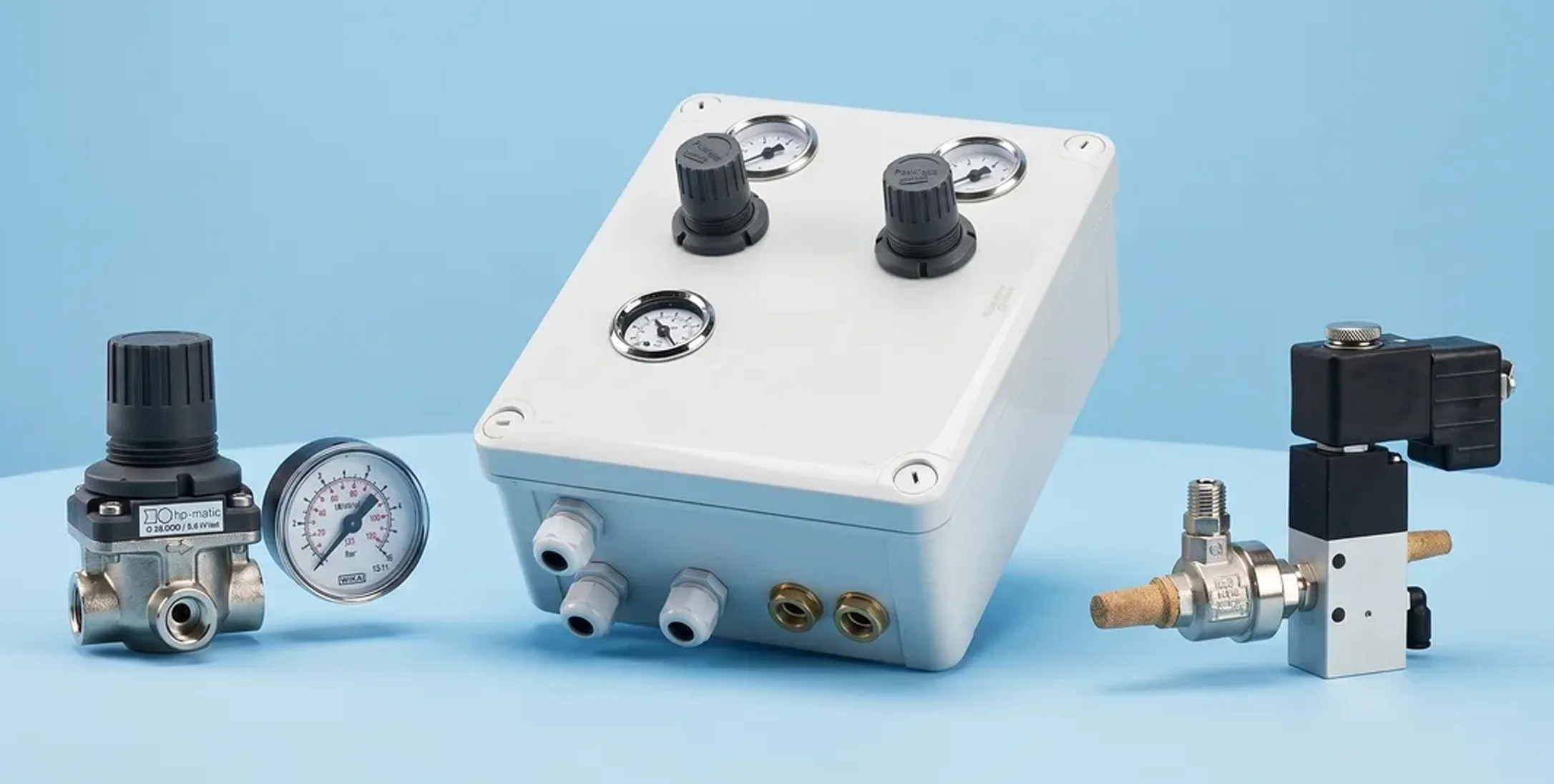
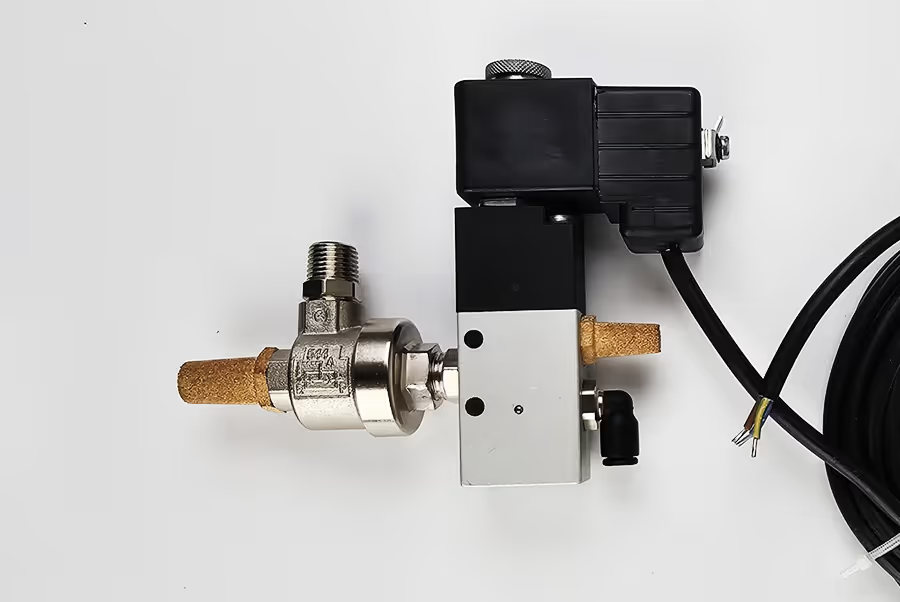
Solenoid valves regulate the air flow into the control chamber of the pinch valve and directly determine the opening and closing behavior of the sleeve. Switching times, response speed, and air consumption depend heavily on the correct sizing of the solenoid valve. Insufficient flow rates or long exhaust lines lead to sluggish switching and unstable process conditions—especially with high cycle rates or large nominal diameters.
We at HO-Matic rely mainly on robust industrial quality from Buschjost and ROSS. Available options include:
The right sizing improves switching behavior, process stability, and energy efficiency of the pneumatic system.
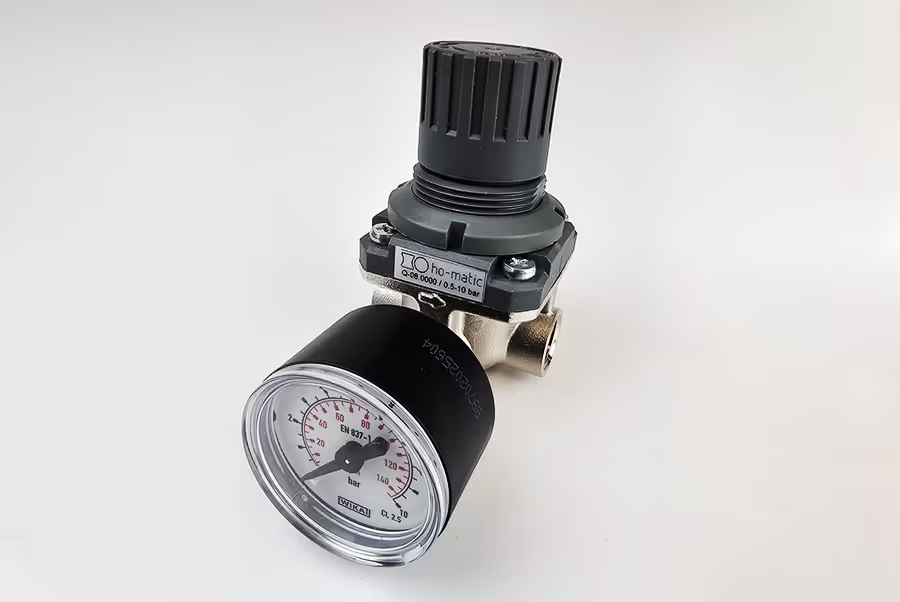
The correct control pressure is critical for the service life of a pinch valve or custom pinch valve solution. Even minor pressure fluctuations directly affect closing force, tightness, and sleeve wear. Typically, the control pressure should be approximately 2 to 2.5 bar above the process pressure—depending on nominal size, sleeve material, and process conditions.
If the control pressure is too low:
Excessively high control pressure, on the other hand, increases mechanical stress on the sleeve and unnecessarily raises energy consumption. Our pressure switches and regulators ensure constant operating conditions and precise pneumatic control. We use, among others:
The quality of the compressed air is particularly important. Moisture, oil, or particles significantly impair solenoid valves, seals, and elastomer sleeves. For permanently stable pneumatic control, we therefore recommend clean, dry, and oil-free compressed air according to ISO 8573-1.
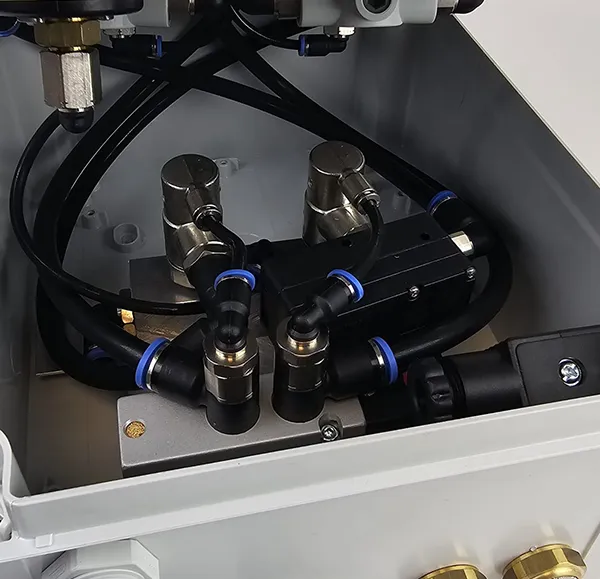
Short switching times and stable processes often require additional performance components. Quick exhaust valves (SEV) are especially important here.
SEVs are mounted directly at the control port. Control air is exhausted immediately at the valve body. This improves:
Especially with nominal diameters from DN 80 or control lines longer than three meters, SEVs significantly increase process stability.
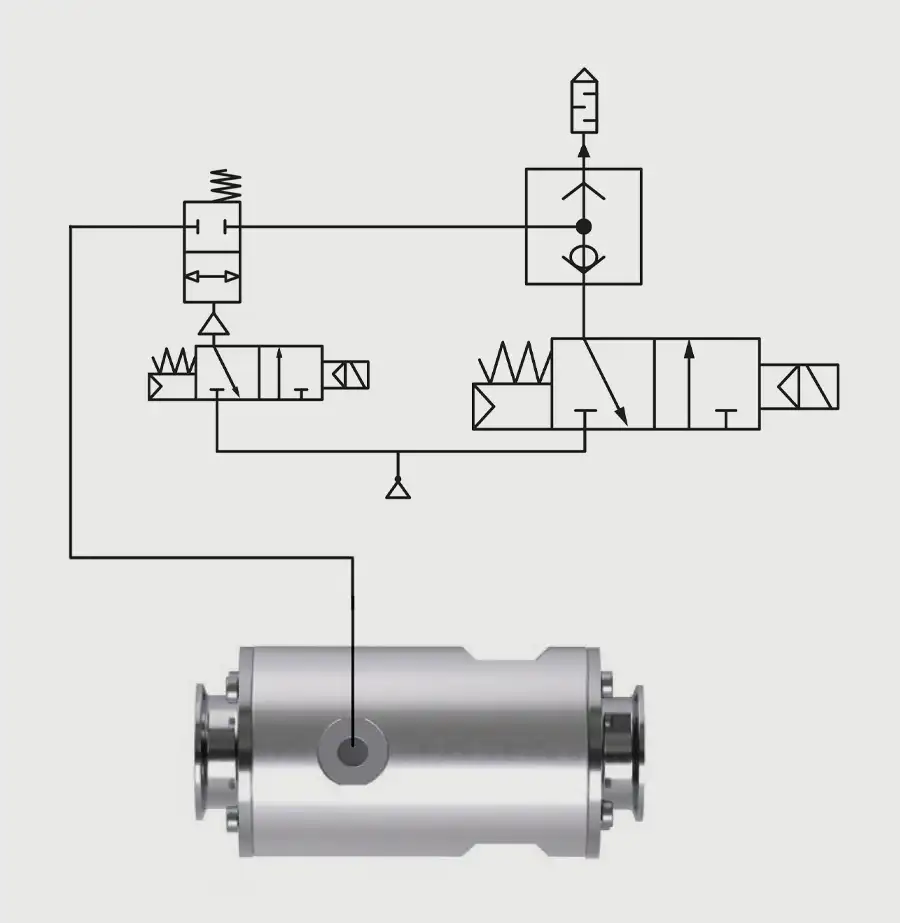
For vacuum processes, HO-Matic also offers the HO-VAC system. The HO-VAC system generates an additional vacuum inside the valve body using a Venturi nozzle. The sleeve is actively opened, maintaining the full pipeline cross-section.
This delivers the following advantages:
This technology is particularly recommended for vacuum conveying above 100 mbar negative pressure to ensure trouble-free operation.
In safety-critical processes, fail-safe functions define valve behavior during power or pressure loss. Our safety control systems ensure that the valve maintains defined states even if the energy supply fails. Depending on process requirements, the valve can:
For the “remain closed” function, we use lockable check valves in combination with solenoid valves. The control pressure is retained and prevents:
For emergency emptying, a rapid opening of the valve is required. The components used meet common industrial standards. SIL-compliant versions are available on request.
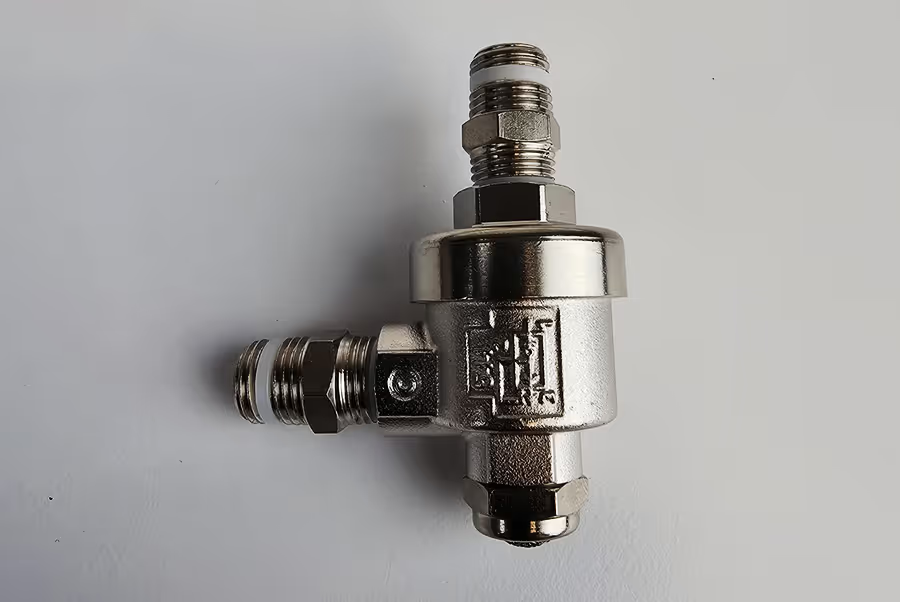
A precise pneumatic control system also includes fittings, control lines, and silencers in addition to the solenoid valve. These influence pressure losses, switching times, and overall system stability.
Incorrectly dimensioned fittings or unsuitable lines cause pressure drops, delayed switching times, and unstable operating conditions.
HO-Matic therefore supplies all components for a technically clean installation from a single source, including:
Silencers improve workplace safety and stabilize the control-air exhaust at the same time. Especially with frequent switching cycles, they significantly reduce the load on the surrounding environment.
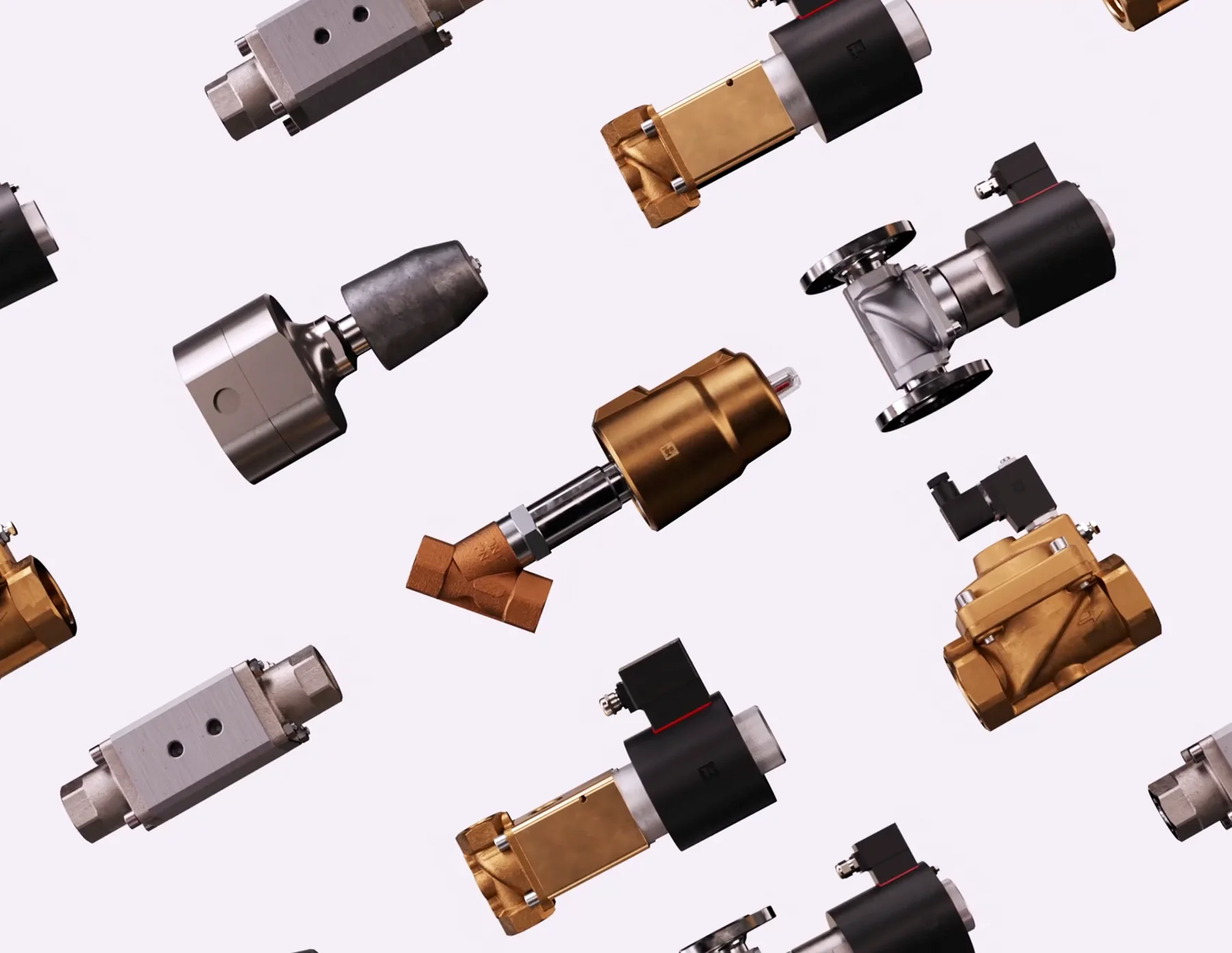

The pneumatic control system directly determines the switching speed, tightness, and service life of a pinch valve. Even minor deviations in control pressure or exhaust behavior change the load on the sleeve and the stability of the process. Especially with abrasive media or high switching cycles, correct sizing is decisive for permanently trouble-free operation.
A matched pneumatic control system improves process safety and reduces sleeve wear. Switching times, air consumption, and control pressure are optimally adapted to the medium, pressure level, and cycle frequency. This significantly lowers maintenance effort, energy consumption, and the risk of unplanned downtime.
The valve control directly influences the reaction speed and closing behavior of the system. Too slow or uneven switching operations lead to unstable material flow and increased mechanical stress on the elastomer sleeve. Precisely matched control components enable consistent, reproducible process sequences.
Pneumatic controls with quick exhaust valves (SEV) are typically used with large nominal diameters or long control lines. In these cases, exhausting through the complete line would cause delayed opening and closing operations. Direct exhaust at the valve significantly shortens switching times and improves overall system dynamics. The SEV also protects the entire control system: in the worst case of a tear in the elastomer sleeve, no conveyed material can enter the control system.
A pneumatic control system with the HO-VAC system is used in vacuum and negative-pressure conveying processes. In these applications there is a risk that the sleeve will collapse under vacuum and restrict free flow. The HO-VAC system generates an additional vacuum inside the valve body using a Venturi nozzle, actively keeping the full pipeline cross-section open. Another typical application is valves that remain closed for very long periods, for example, at big bags or silos. In such cases there is a risk that the sleeve only sluggishly returns to its fully round shape when opening. The HO-VAC control ensures that the sleeve always opens fully and evenly.
The quality of the compressed air is decisive for the reliability and service life of the entire pneumatic control system. Contaminants such as moisture, oil or particles attack solenoid valves, seals, and elastomer sleeves, leading to malfunctions. Professional compressed air treatment with filtration and drying increases operational reliability and significantly extends the service life of all components.