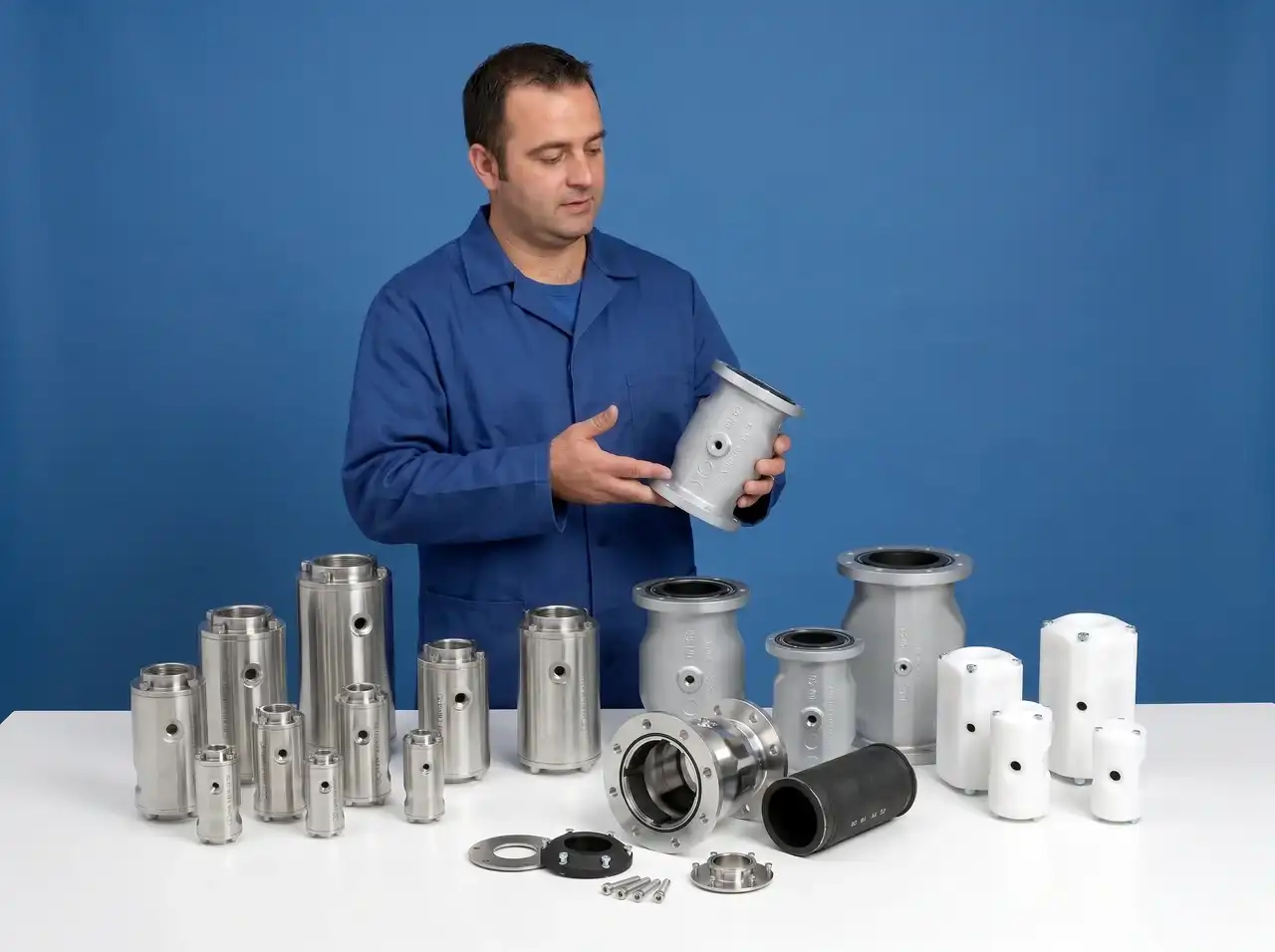
The wrong valve in the wrong place costs money—and usually in ways that don't show up in the procurement budget: as production downtime, as an emergency maintenance call at 2 a.m., and as a prematurely worn component that should have lasted years.
Ball valves are excellent shutoff devices. For clean water, oil, or gas, they are robust, tight, and economical. But the moment solids, granulates, powders, or abrasive slurries enter the picture, the very thing that makes a ball valve strong—its precision-machined interior—becomes its decisive weak point.
This article analyzes the three critical differences between a ball valve and a pneumatic pinch valve: dead-space behavior, wear mechanism, and the often-underestimated total cost of ownership (TCO). No marketing—just physics and numbers.
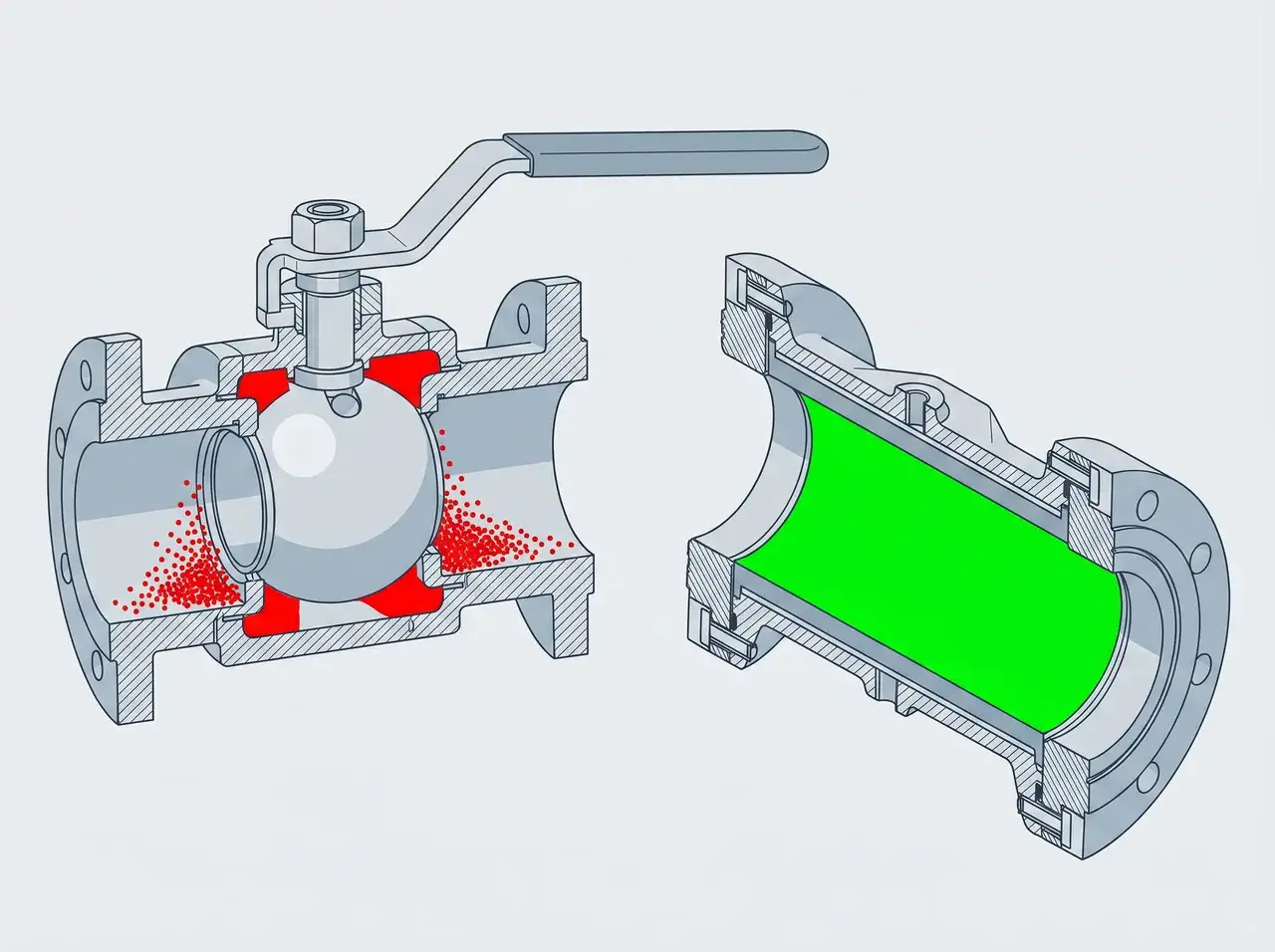
A ball valve works through a bored ball rotating inside a housing. That housing is not simply a straight pipe extension—there are cavities, seal grooves, and a void in which the ball rotates.
For water: irrelevant. For bulk solids: a structural problem.
The real-world scenario: A conveying stream is transporting cement, plastic granulate, or sugar. The valve closes. At that same moment, particles are forced into the void behind the ball by differential pressure. The material compacts. On the next opening cycle, the granulate has compressed against the elastomer seal. The valve opens sluggishly, no longer closes completely, or the actuator stalls.
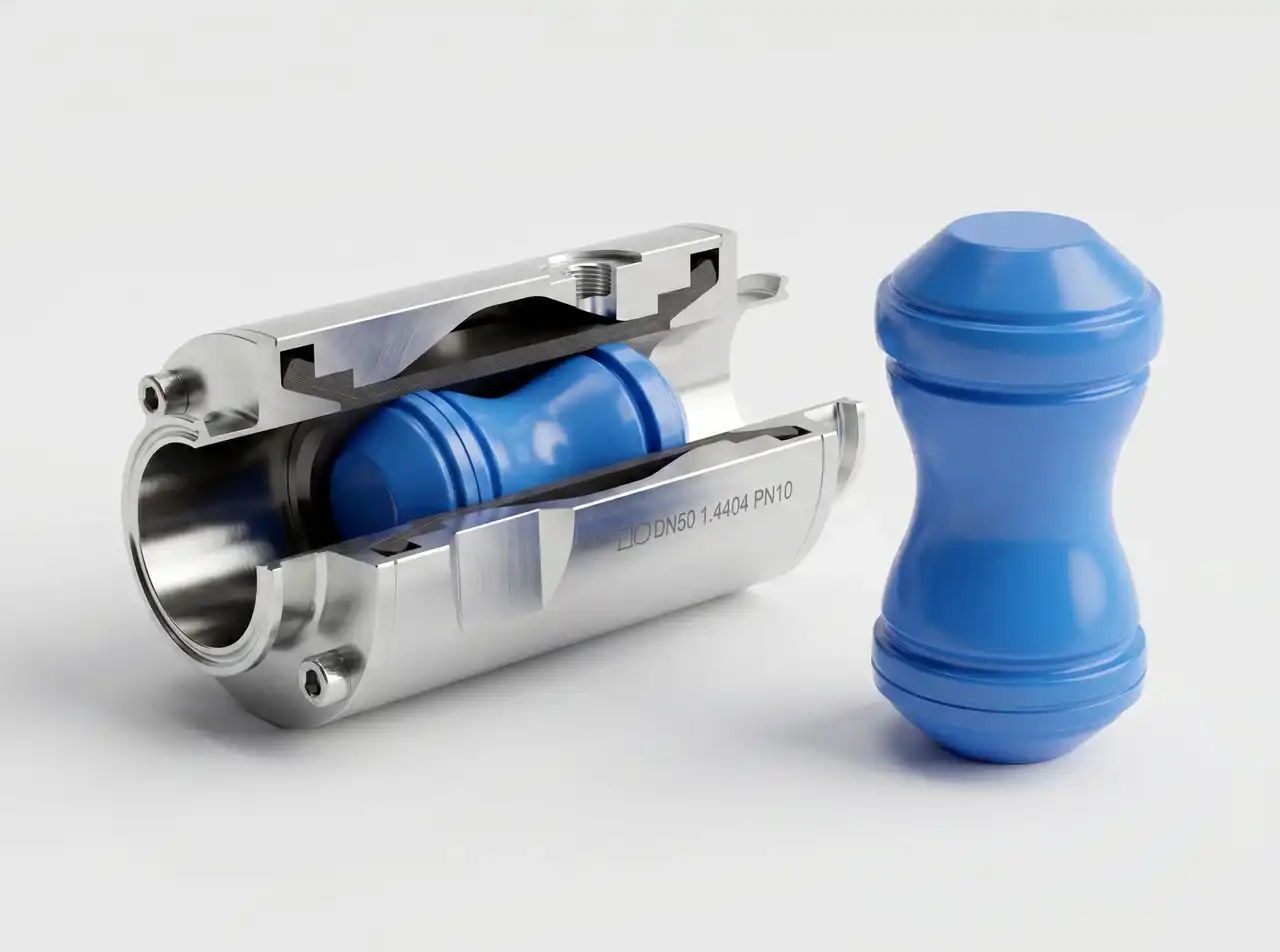
What happens with a pinch valve: In the open position, a pinch valve is nothing more than an extension of your pipeline—a straight sleeve with a circular cross-section. There are no moving parts in the media flow, no niches, and no cavities. On closing, the sleeve simply pushes the medium aside. Blockage is physically impossible.
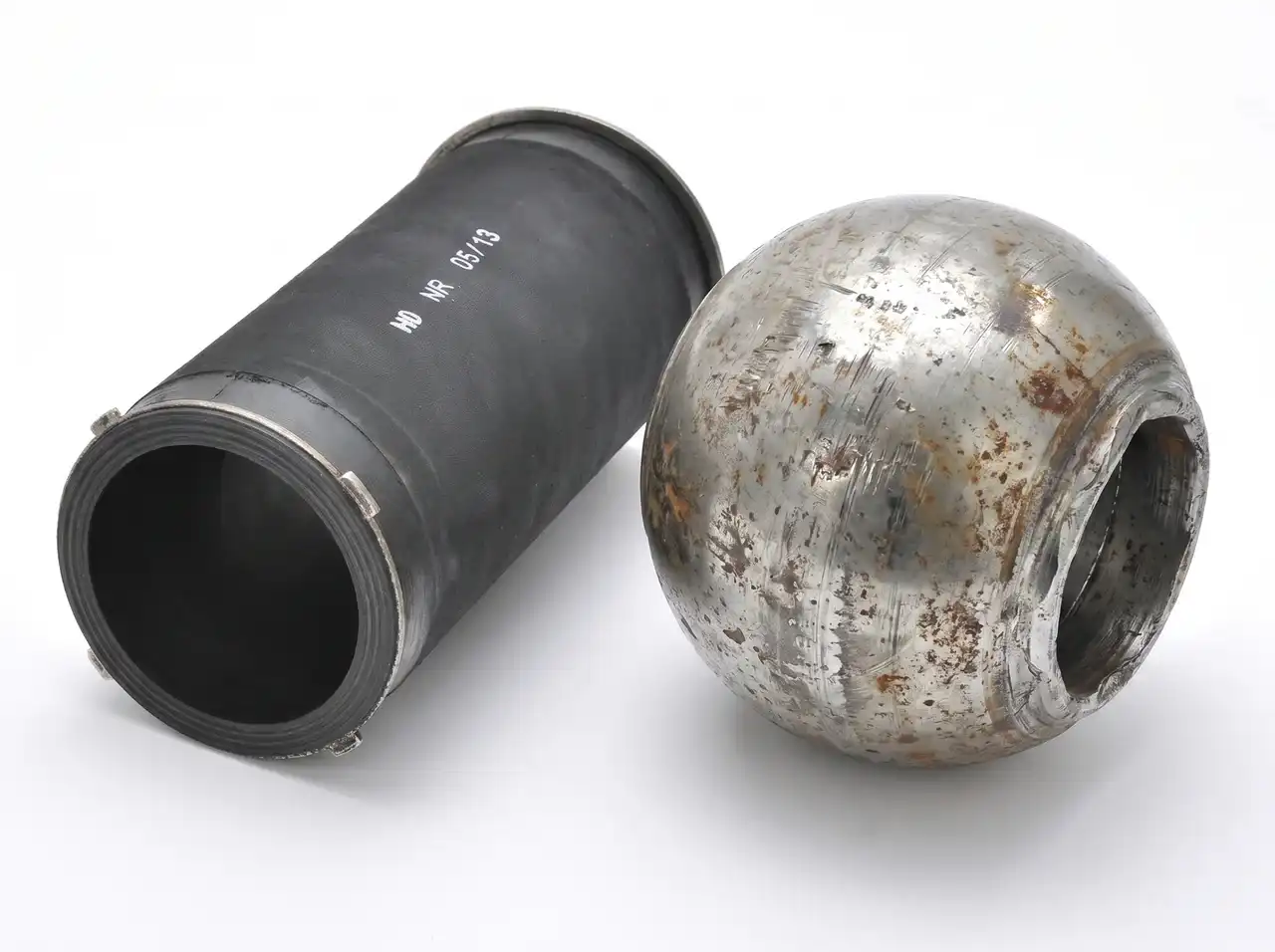
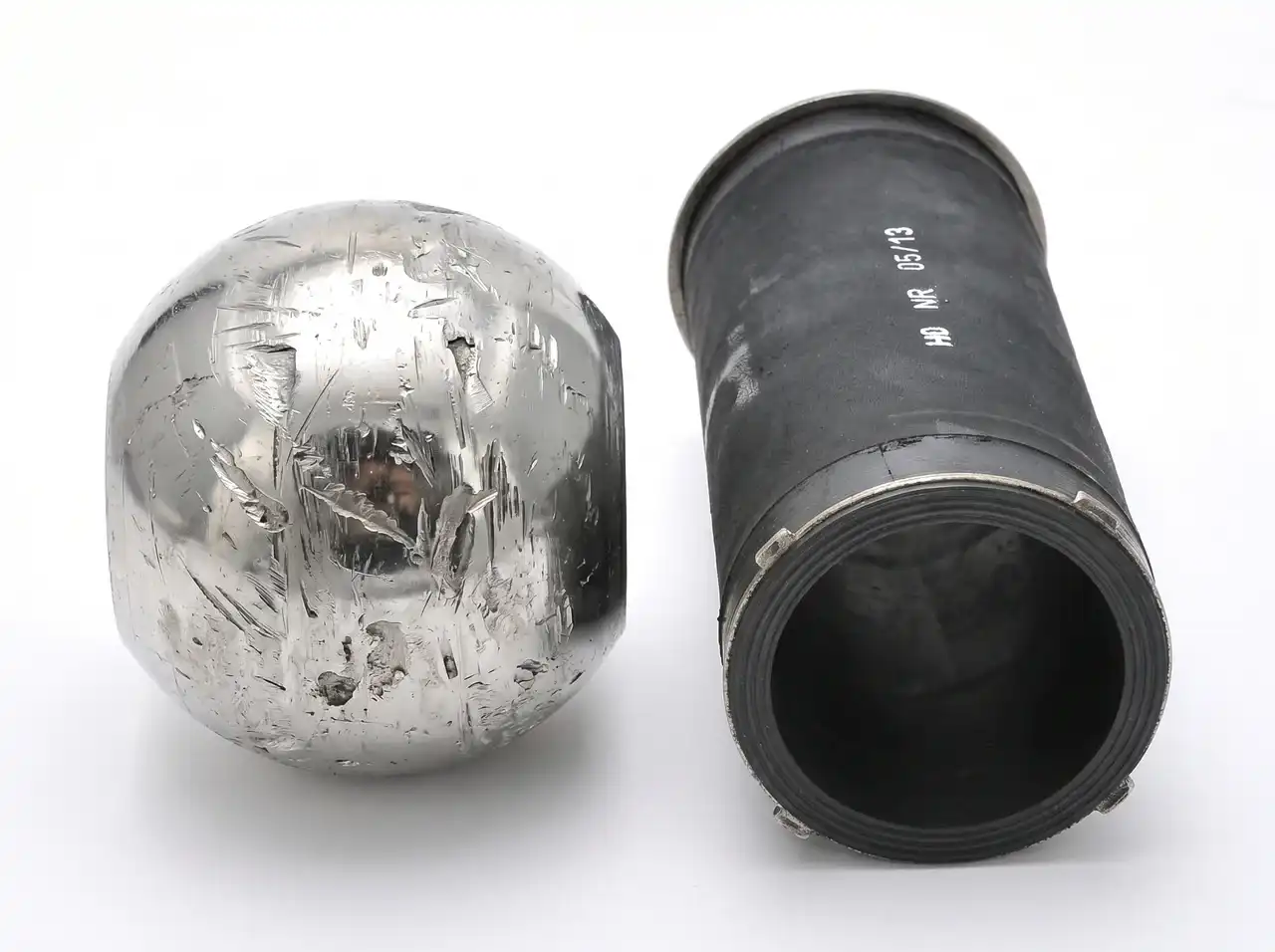
It sounds like a paradox: with abrasive media—sand, ore, sugar crystals—a rubber sleeve often outlasts a polished steel ball by a significant margin. Behind this lies a well-understood material mechanics effect.
Erosion on metallic surfaces: Hard particles striking a metal surface at flow velocity act like continuous sandpaper. A valve ball is typically hard-chromed or stainless steel—a smooth surface that progressively roughens through erosion. Once the first micro-roughness appears, abrasion increases exponentially: more surface area, more attack surface, and faster wear. The sealing function suffers simultaneously, as a scratched ball no longer seals cleanly against its metal or PTFE seat.
The trampoline effect of the elastomer sleeve: Highly elastic rubbers—particularly natural rubber (NR) for abrasive bulk solids—respond to particle impact fundamentally differently from metals. The elastomer deflects, absorbs the kinetic energy, and springs back to its original form. No plastic abrasion occurs; energy is dissipated rather than converted into material removal. This is the same mechanism that makes car tires more resistant to curb impacts than aluminum rims.
Material selection is critical: Not every sleeve suits every medium. NR for mechanically abrasive applications, EPDM for chemicals and hot steam, and NBR for oils and hydrocarbons. The ability to specify only this single component to the medium—without replacing the entire valve—is an underrated advantage of the pinch valve principle.
The list price of a ball valve often looks attractive. But total cost of ownership tells a different story.
Typical ball valve maintenance scenario in an abrasive application—every 6 to 10 weeks in demanding installations:
Total duration: 2 to 4 hours. Cost: spare parts + two technician labor rates + proportional production loss.
Pinch valve maintenance scenario—same valve, different world:
The sleeve is the only wearing part. In most HO-Matic sizes it can be replaced tool-free or with a single wrench—without removing the valve from the pipeline.
Total duration: 5 to 15 minutes. Frequently a single maintenance technician, no torque protocol, no flange leak test.
What this means over a full operating year: At 8 maintenance events per year and an assumed 3-hour downtime per event, 24 unplanned production hours arise from valve maintenance alone. With a pinch valve and its substantially longer sleeve service life, this figure drops to a fraction—even if the pinch valve carried a higher list price.
Not sure whether a pinch valve suits your application? Share your medium, operating pressure, and installation details—we will assess at no charge whether a pinch valve is the right choice.