 HO-Matic Editorial Team
Residues on edges, gaps the cleaning medium never reaches, product bridges in viscous media: in hygiene-sensitive processes, the internal geometry of a valve decides whether cleaning can be validated or whether every batch carries a residual risk. Every recess in the flow area becomes a collection point, and it cannot be cleaned away, only designed out.
This article explains what makes a valve cavity-free, where conventional designs inevitably reach their limits, how the cavity-free valve function is solved in engineering terms and what our 4x Series at HO-Matic adds on top.
What Is a Cavity-Free Valve?
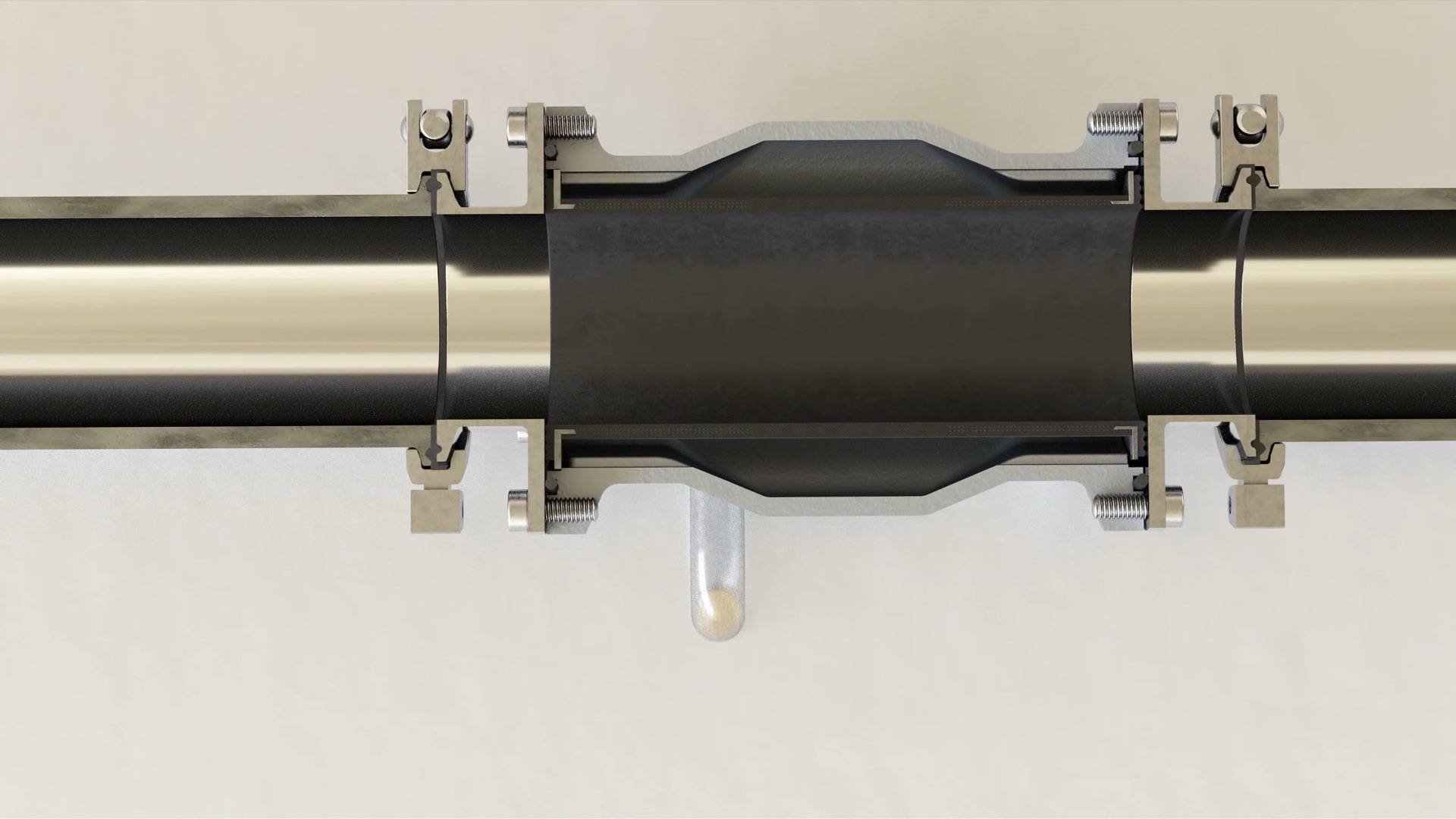
A cavity-free valve has an interior with no cavities, gaps or undercuts in contact with the medium. The medium flows through a smooth, continuous cross-section across the entire face-to-face length. Designers gain a reproducible flow geometry from this. Operations and purchasing gain cleaning processes that can be validated, longer maintenance intervals and less batch risk.
A smooth interior therefore decides whether a process stays clean or builds up residues. Every recess in the flow area becomes a collection point for particles, fats and product remnants, and the cleaning medium reaches such shadow zones only in part. What matters is not how thoroughly you clean, but whether the geometry can be reached at all.
Why Conventional Valves Are Not Cavity-Free
Conventional designs carry cavities with them by construction. They appear wherever a moving shut-off element meets a fixed counterpart.
Seat Valves
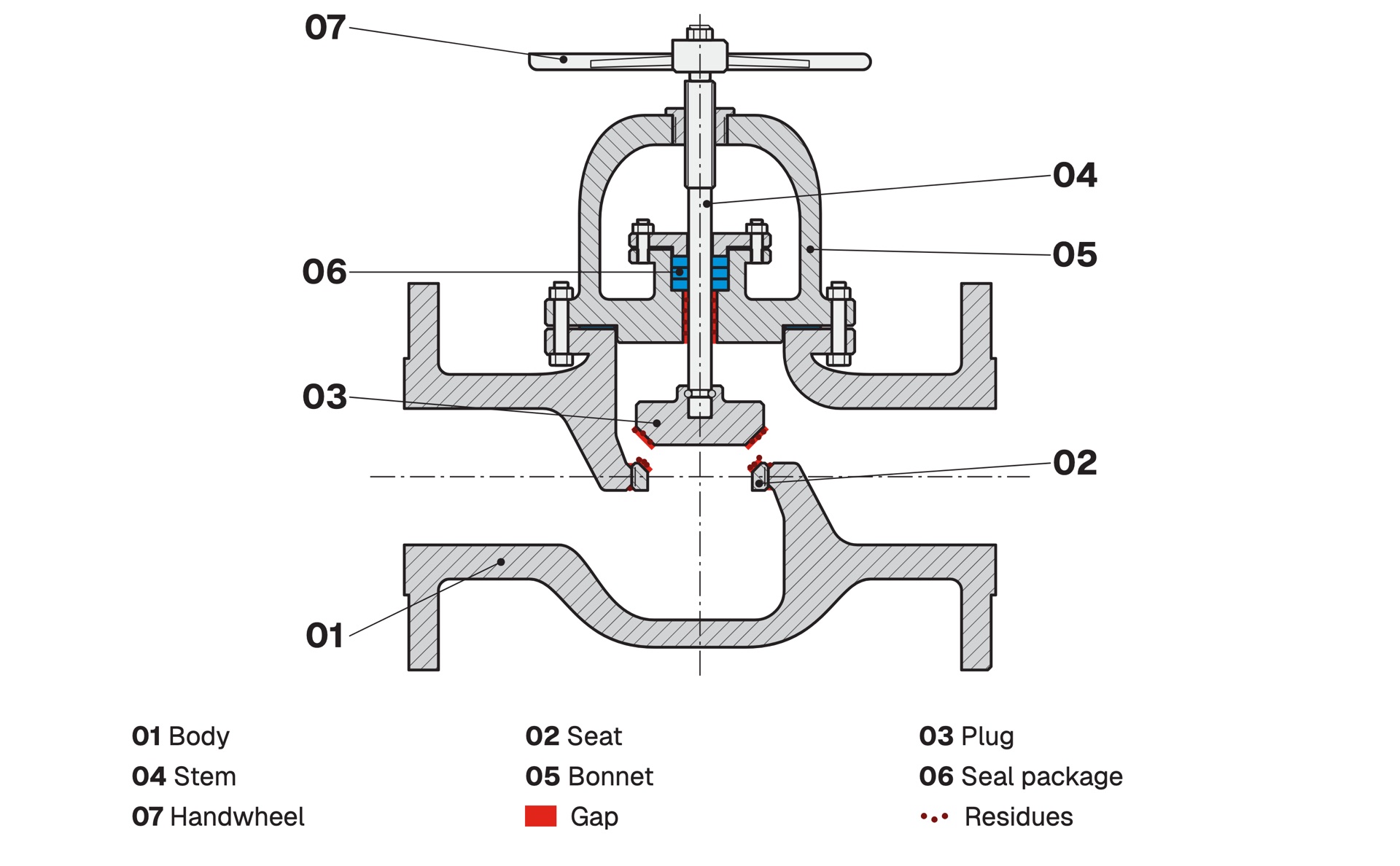
Seat valves guide the medium over a seat and a plug. A gap forms at this transition. Particles, fats and product remnants settle there, and the cleaning medium reaches the shadowed zone only in part. What stays behind are breeding grounds for bacteria and encrustations.
Diaphragm Valves
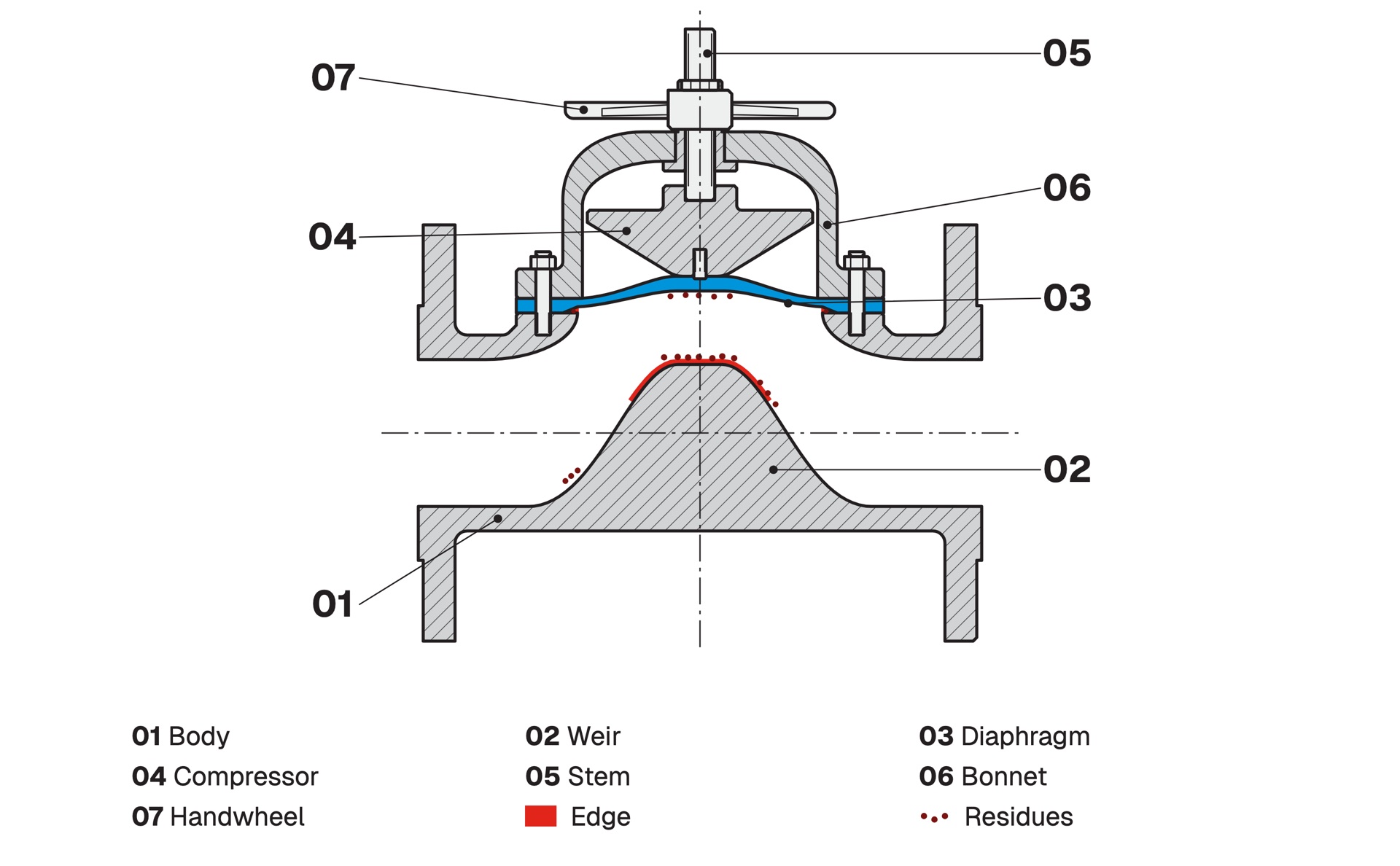
Diaphragm valves guide the medium over a weir with a diaphragm pressed onto it. The diaphragm presses against the weir and forms an edge. Product sticks to that edge and grows inwards. With tacky and viscous media, bridges form: the cross-section narrows and the volume flow is distorted.
Ball Valves
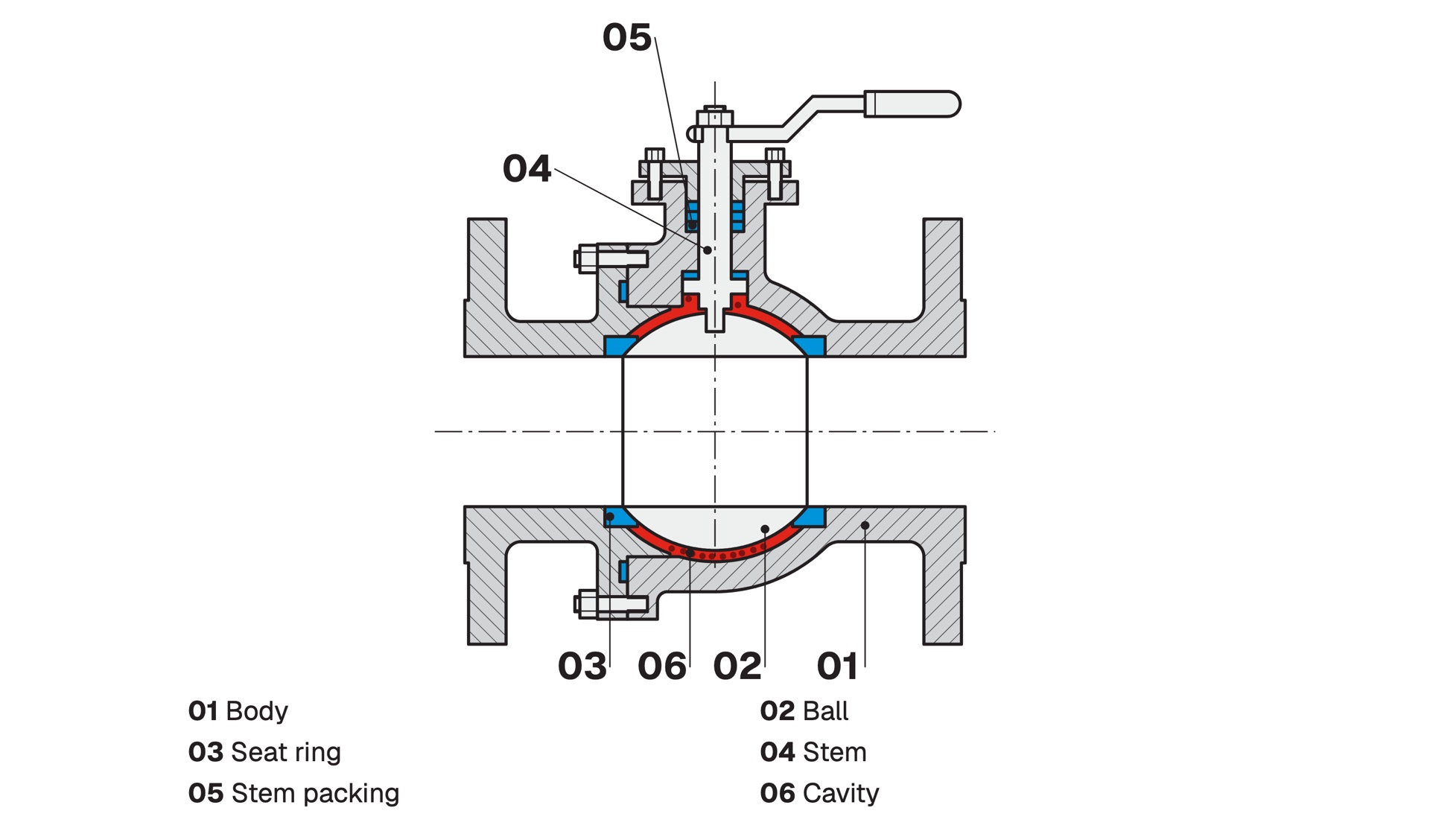
Ball valves guide the medium past gaps between ball and body. The ball sits in the body with clearance, and product collects in these gaps, even after cleaning. Food, pharmaceutical and chemical plants run into their limits during validation at exactly this point, because residues turn into contamination paths.
Cavity-Free or Not? Valve Types Compared
The table sorts the common designs by their internal geometry and shows how many components sit in the product stream in each case.
| Design | Cavities in the wetted area | Wetted parts | Typical weak point |
|---|---|---|---|
| Seat valve | yes | Body, seat, plug, seals | Gap between seat and plug |
| Diaphragm valve | yes | Body, weir, diaphragm | Edge at the transition to the diaphragm |
| Ball valve | yes | Body, ball, seat rings | Clearance between ball and body |
| Pinch valve (standard) | no | Sleeve, in some cases connection pieces | Joints at the sleeve ends |
| HO-Matic 4x Series | no | the sleeve only | no joint in the product stream |
How Does a Cavity-Free Valve Function?
The cavity-free valve function rests on a simple principle: the shut-off element closes directly in the line instead of working against a fixed seat. That removes every recess from the flow area.
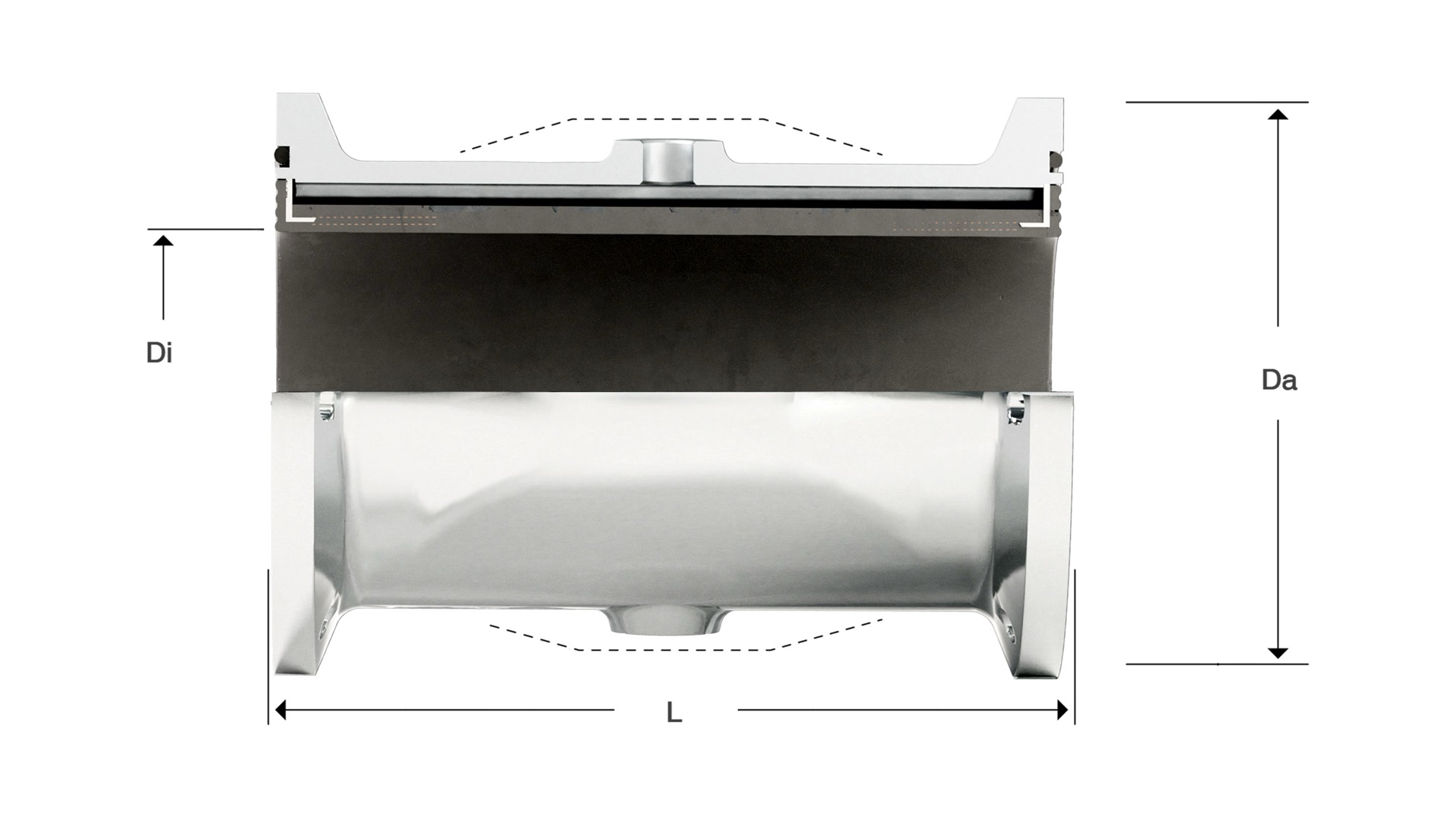
The interior stays smooth across the entire face-to-face length and keeps the full pipe bore when open. The medium runs straight through, with no deflection and no step.
Cavity-Free Shut-Off Valve: A Design Without a Seat
Pinch valves are cavity-free by design. A continuous, flexible elastomer sleeve for pinch valves performs the piping and the shut-off function in a single component. To close, the actuator squeezes the sleeve from the outside until the inner walls meet. On opening, it springs back to the full cross-section.
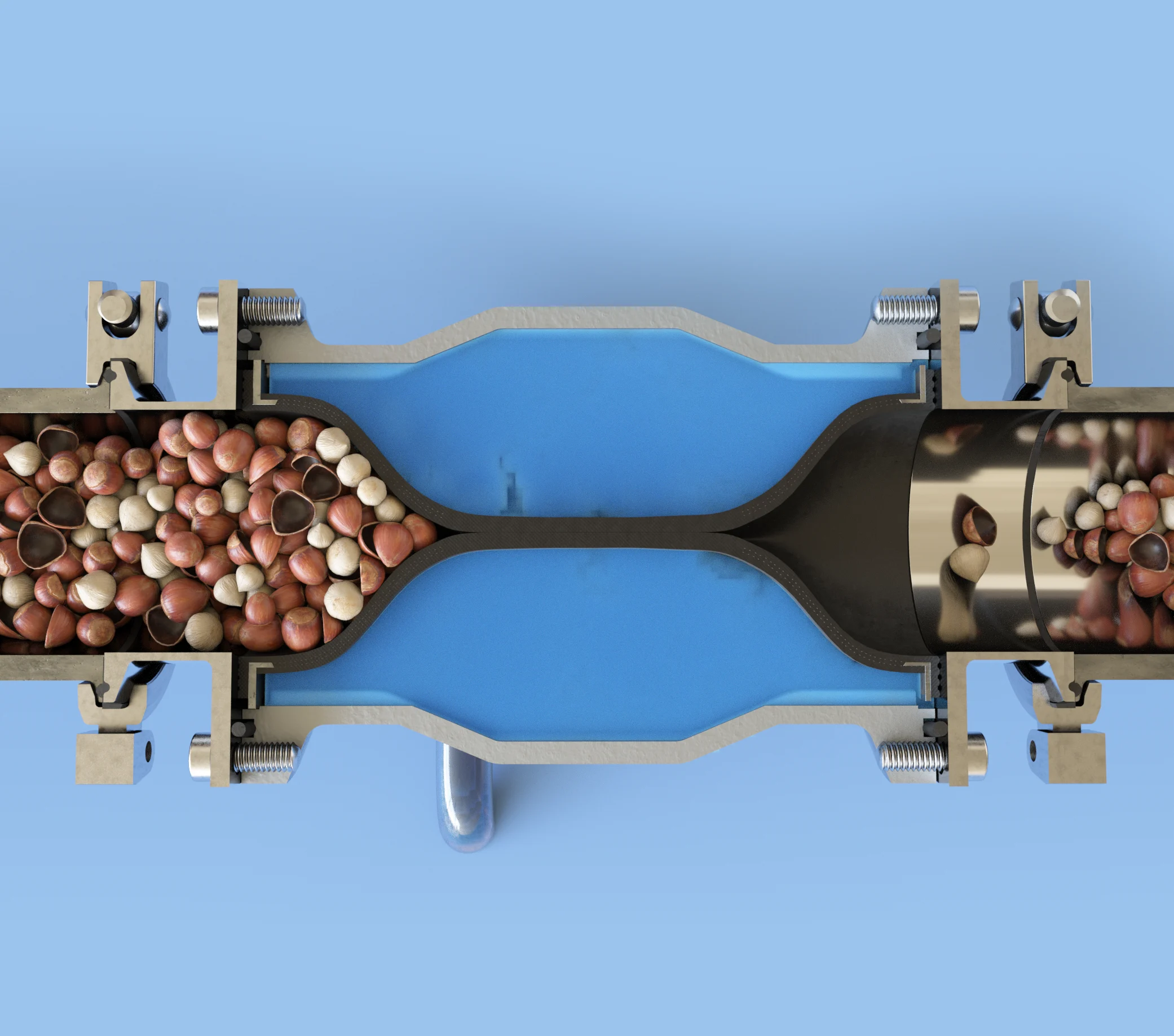
This design does without seat, plug, ball and seal package in the wetted area entirely. Where a valve works cavity-free, wear at transitions disappears as well.
The HO-Matic 4x Series: The Cavity-Free Valve Taken Further
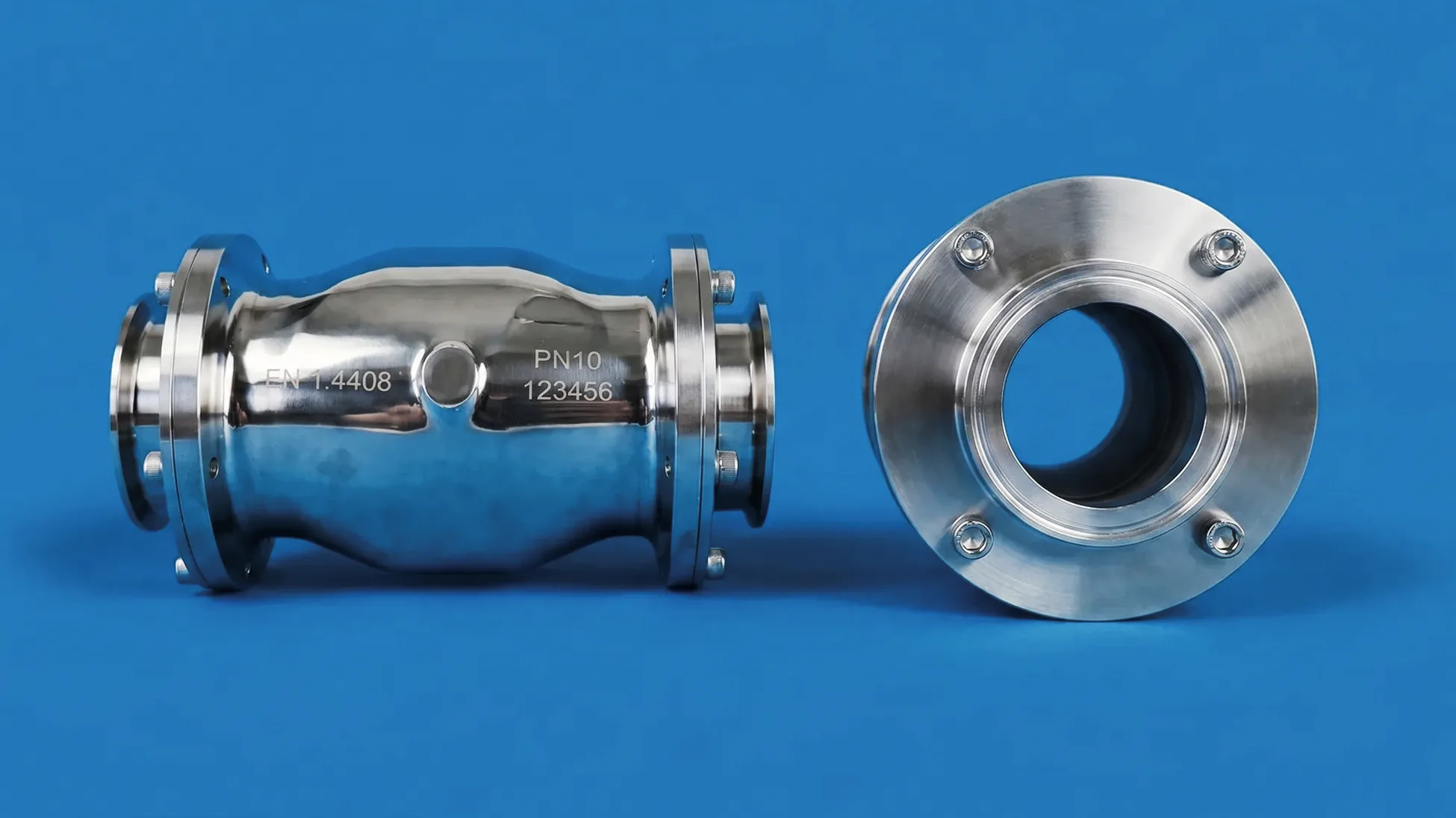
The 4x Series reduces product contact to one single component: the sleeve. Any further materials and transitions stay completely outside the product area.
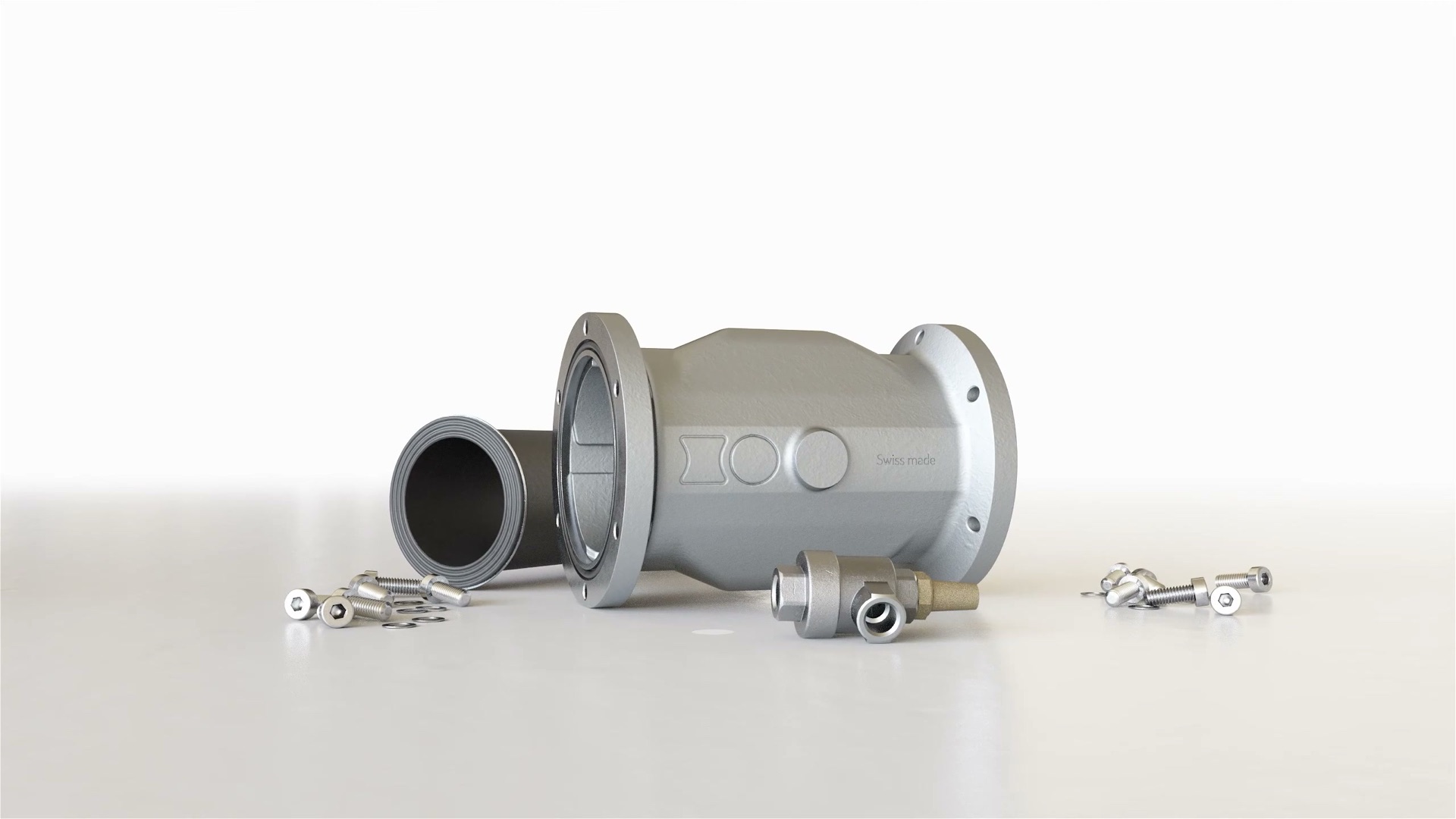
Pinch valves are considered cavity-free as a matter of course. In many designs on the market, however, several components or joints still sit in the contact area: connection pieces, inserts or sealing rings at the sleeve ends. Each of these points forms an additional transition, and with it a potential deposition zone.
Our 4x Series solves this differently. The sleeve is simply slid in and twisted into place. Operation stays entirely free of oil and grease. One material, one surface, no joint in the product stream. For you, that means:
- Maximum process safety, because only one known, tested material touches the product
- Simple cleaning, because the cleaning medium reaches every internal surface directly
- Less exposed surface for deposits, germs and encrustations to take hold
- Clear documentation for auditors, because the material chain stays easy to follow
The series is patented and part of our modular system with over 8,000 versions. We manufacture in Switzerland and obtain all base materials from verified sources. For special requirements we build individual custom pinch valves and deliver them at short notice.
Request a no-obligation inquiry
What Does a Cavity-Free Shut-Off Valve Deliver in Practice?
The benefit of a cavity-free valve shows up in three places: shorter cleaning times, lower contamination risk and longer maintenance intervals.
- CIP capability: With no inaccessible cavities, the cleaning medium reaches every surface. Cleaning cycles get shorter and batch changeovers go faster.
- Contamination risk: A single material in contact with the medium cuts the number of possible entry paths to a minimum.
- Maintenance intervals: With no transitions in the flow area, localized wear at edges falls away. The sleeve remains the only wear part and can be changed in a few minutes with standard tools, on most series without taking the valve out of the line.
Typical applications for the 4x Series are therefore processes in which cleaning and product changes set the pace.
Food and Beverage Production
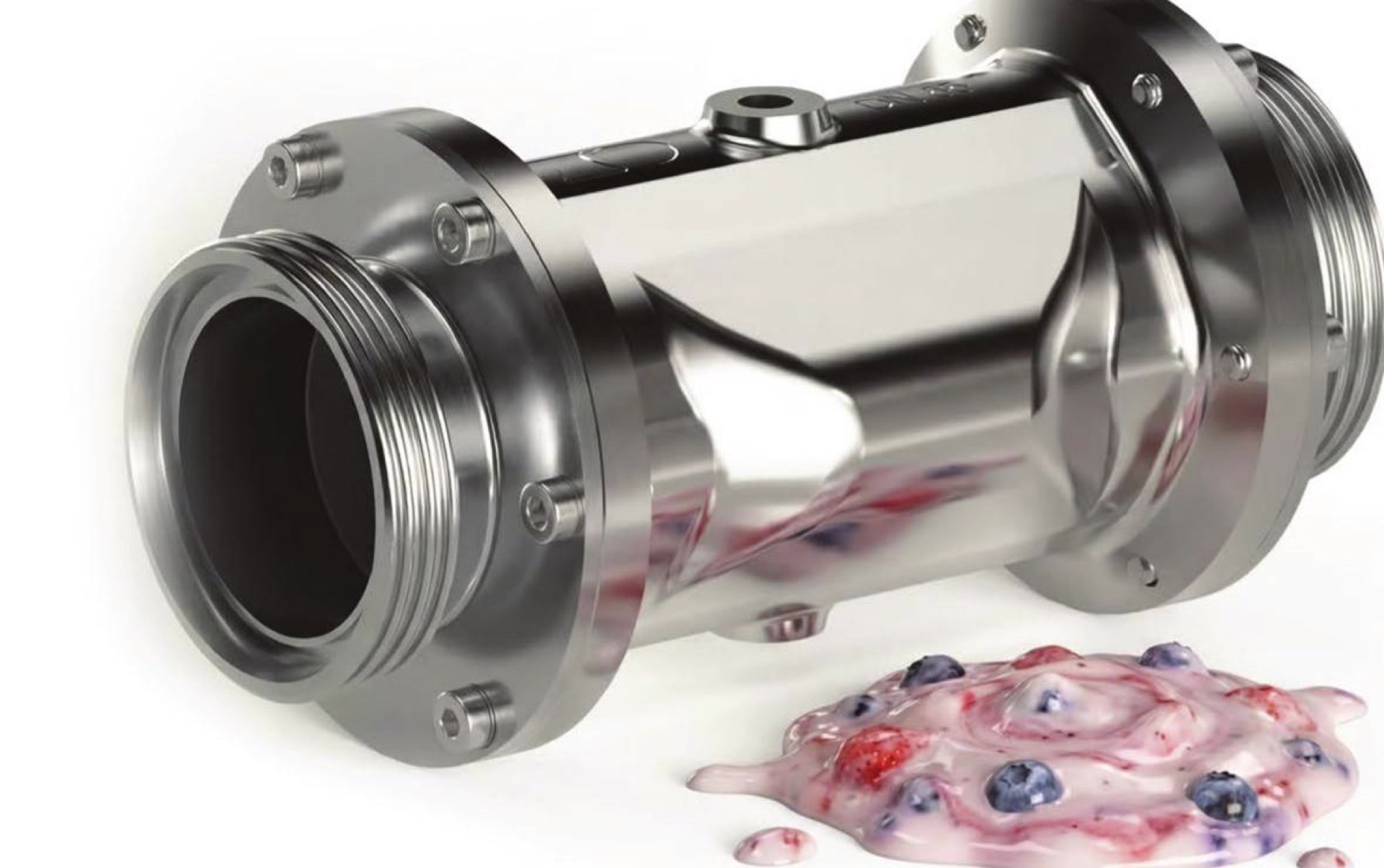
Tacky, viscous media and media containing solids, such as sauces, pastes and fillings, tend to bridge at every edge. A smooth passage without a step prevents exactly that and shortens the time between two batches.
Pharmaceuticals and Biotechnology
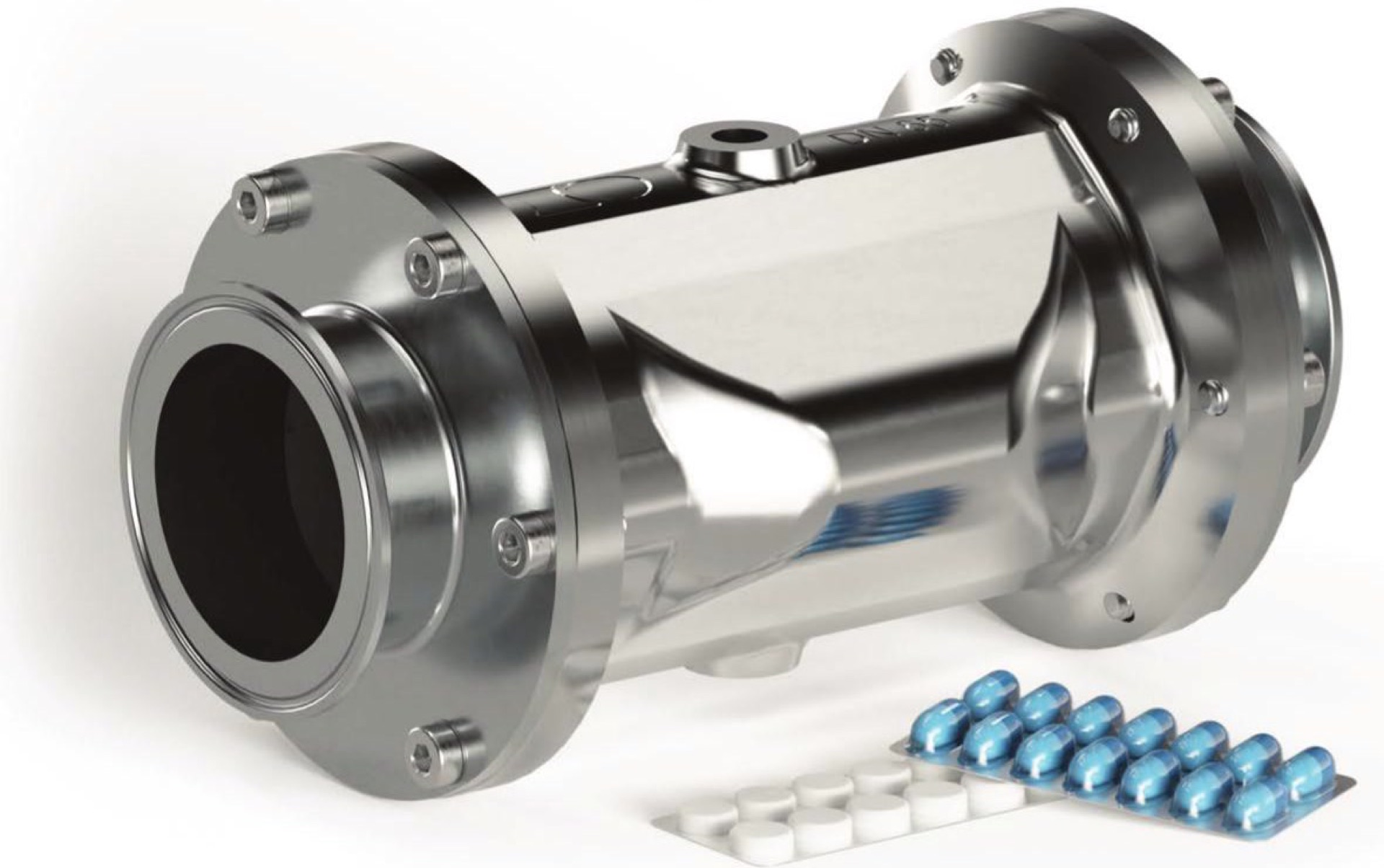
Active ingredients and suspensions are subject to strict hygiene requirements. Because only the sleeve touches the product, the material chain stays short and the documentation for auditors stays manageable.
Chemical Processing
Aggressive and encrusting media create a heavy cleaning workload. With no gaps and no undercuts, there is nowhere for encrustations to take hold and narrow the cross-section on the next stroke.
Does Your Process Need a Cavity-Free Valve?
Five questions narrow the need down quickly:
- Medium: Is the product tacky, viscous or lumpy, or does it tend to encrust?
- Cleaning: Does the plant have to be CIP-capable, and does the cleaning have to be validatable?
- Batch changeover: How often does the product change, and how long may the changeover take?
- Documentation: Do you have to prove to auditors which materials touch the product?
- Maintenance: How often is a part replacement due, and can it be carried out in the line?
As a rule of thumb: As soon as hygiene, validation or frequent product changes shape the process, a cavity-free valve is not an option but a basic requirement. With clean, low-viscosity media and no hygiene requirements, the decision tends to come down to pressure drop and maintenance effort.
The Cavity-Free Valve as the Standard for Critical Processes
Freedom from cavities is the baseline requirement for every hygiene-sensitive, deposit-critical process. Seat valves, diaphragm valves and ball valves cannot meet it by design, because seat, weir or ball clearance always leaves a gap or an edge behind. Pinch valves meet it inherently, because a continuous sleeve replaces the fixed valve seat.
Our 4x Series takes this one step further and limits product contact to this single component. This keeps the valves oil- and grease-free, with no joint in the product stream. Our production site in Switzerland also allows for short delivery times and custom versions from small batch sizes upwards.
Would you like to find out whether a cavity-free valve fits into your existing plant? Our engineering team matches connection type, face-to-face length and sleeve material to your process.
FAQ: Cavity-Free Valve
What Does Cavity-Free Mean for a Valve?
A cavity-free valve has an interior that contains no cavities, gaps or undercuts in which medium can collect. The product touches only smooth surfaces that the cleaning medium can reach in full. This is achieved with a shut-off element that closes directly in the line instead of against a fixed seat.
Which Valve Types Are Cavity-Free?
Pinch valves are cavity-free by design, because a continuous elastomer sleeve replaces the fixed valve seat. Seat valves, diaphragm valves and ball valves are not: seat and plug form a gap, weir and diaphragm an edge, ball and body a clearance. Even among pinch valves there are differences, as soon as connection pieces or sealing rings sit in the product stream.
What Role Does the Sleeve Play in a Cavity-Free Valve?
The sleeve is the only component in direct contact with the product. It provides shut-off tightness and unrestricted flow at the same time. High-grade elastomers are what determine service life and process safety here. At HO-Matic you replace the sleeve as a wear part quickly and with standard tools.
Is the 4x Series Suitable as a Cavity-Free Valve for Pharmaceutical or Food Applications?
Its cavity-free interior predestines the basic design for hygiene-sensitive areas. Only the sleeve touches the product; every other component stays outside the wetted area. We clarify the specific suitability with you on the basis of medium, temperature and cleaning procedure.
Is a “Cavity-Free Valve” the Same as a “Hygienic Valve”?
Freedom from cavities is a central prerequisite for hygienic suitability, but it does not replace it entirely. Hygienic valves meet additional requirements for surface quality, material approvals and documentation. So assess both aspects separately: geometry and material chain.
How Is a Cavity-Free Valve Cleaned?
As a rule by CIP, that is, without disassembly. Because no shadow zones exist, the cleaning medium reaches every internal surface directly, and rinsing times are shorter than with designs that have a gap or an edge. For sizing, what counts alongside the geometry is the temperature and chemical resistance of the sleeve.
Can a Cavity-Free Valve Be Retrofitted into Existing Plants?
Yes. The modular system covers numerous connection variants such as flange, thread and clamp connections, which makes retrofitting straightforward. We also manufacture special face-to-face lengths and adapted flange patterns.