 HO-Matic Editorial Team
A food-grade valve is a valve that controls the product stream in food and beverage production and leaves no residues behind. That requires two properties: all wetted parts are made of approved materials, and the geometry offers the product no niche. If either is missing, the valve is not suitable for the food sector, even with a material certificate.
This article shows which approvals apply to a valve suitable for food use, why dead spaces are the biggest hygiene risk in a valve, how the common designs differ and which sleeve grade suits which medium.
What Makes a Valve Suitable for Food Use?
A valve is suitable for food use when every component in product contact is demonstrably approved for food. The proof runs through the materials, not through an approval of the valve as a whole. Three regulatory frameworks are decisive:
- FDA 21 CFR: Positive list of the US agency for materials in food contact. 21 CFR 177 applies to elastomers, and 21 CFR 177.2600 to silicone in particular.
- EC 1935/2004: European framework regulation for all materials in food contact, supplemented by EU 10/2011 for plastics.
- USP Class VI: Proof of biocompatibility from the pharmaceutical sector. Not mandatory in food production, but frequently required in dairy and baby food plants.
Why Dead Spaces Are the Biggest Hygiene Risk
A dead space is any area in the valve that the flow does not reliably reach: cavities behind sealing seats, gaps at threads, voids around moving parts. Product residues remain there that even a CIP cycle does not reliably flush out. Under nutrient conditions, biofilms form, and these lead to cross-contamination, shortened shelf life and, in the worst case, a product recall.
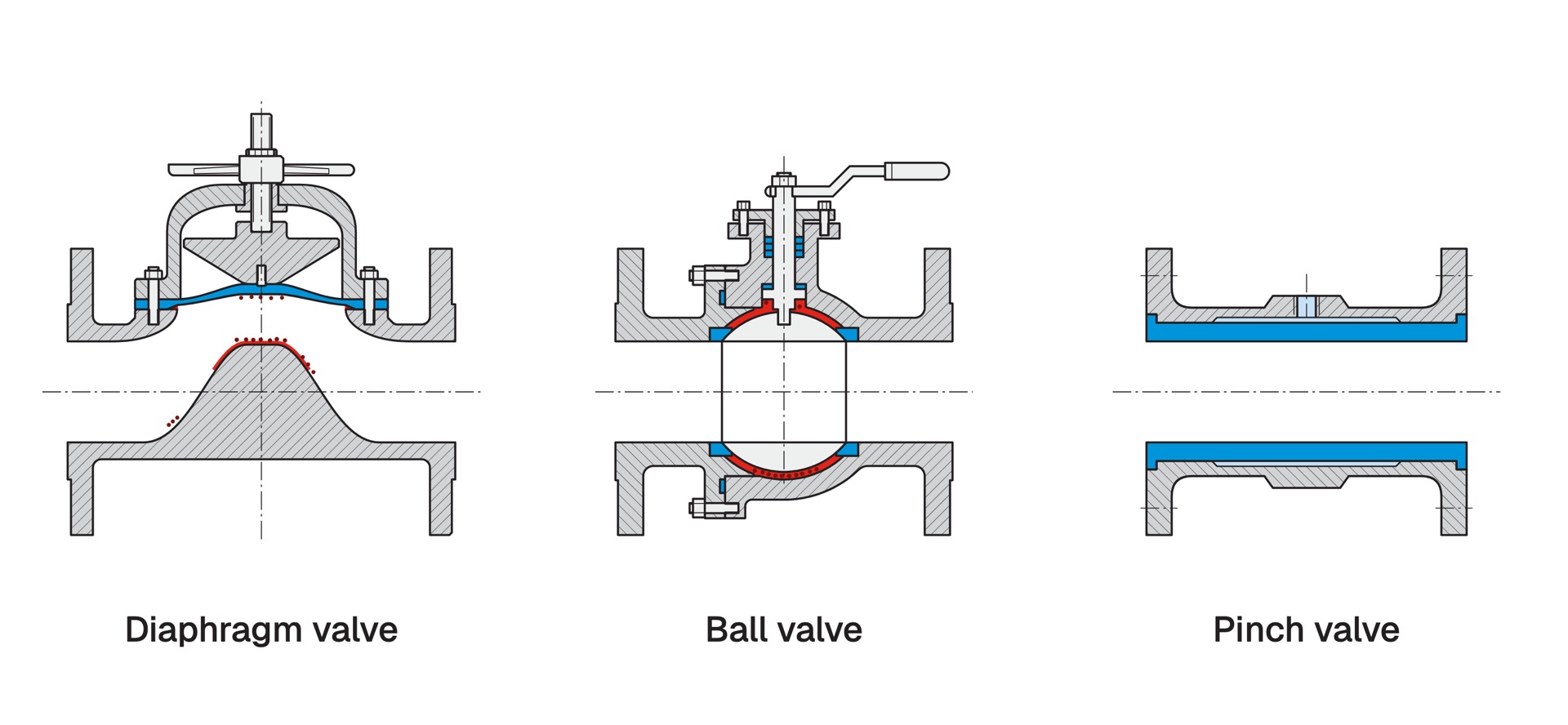
Whether dead spaces arise is decided by the design alone:
- Diaphragm valves: The diaphragm seals against a weir in the body. The flow path is deflected, and a zone of low flow remains behind the weir.
- Ball valves: An annular gap sits between ball and body, and product collects in it. With media containing solids, there is also wear at the sealing seats.
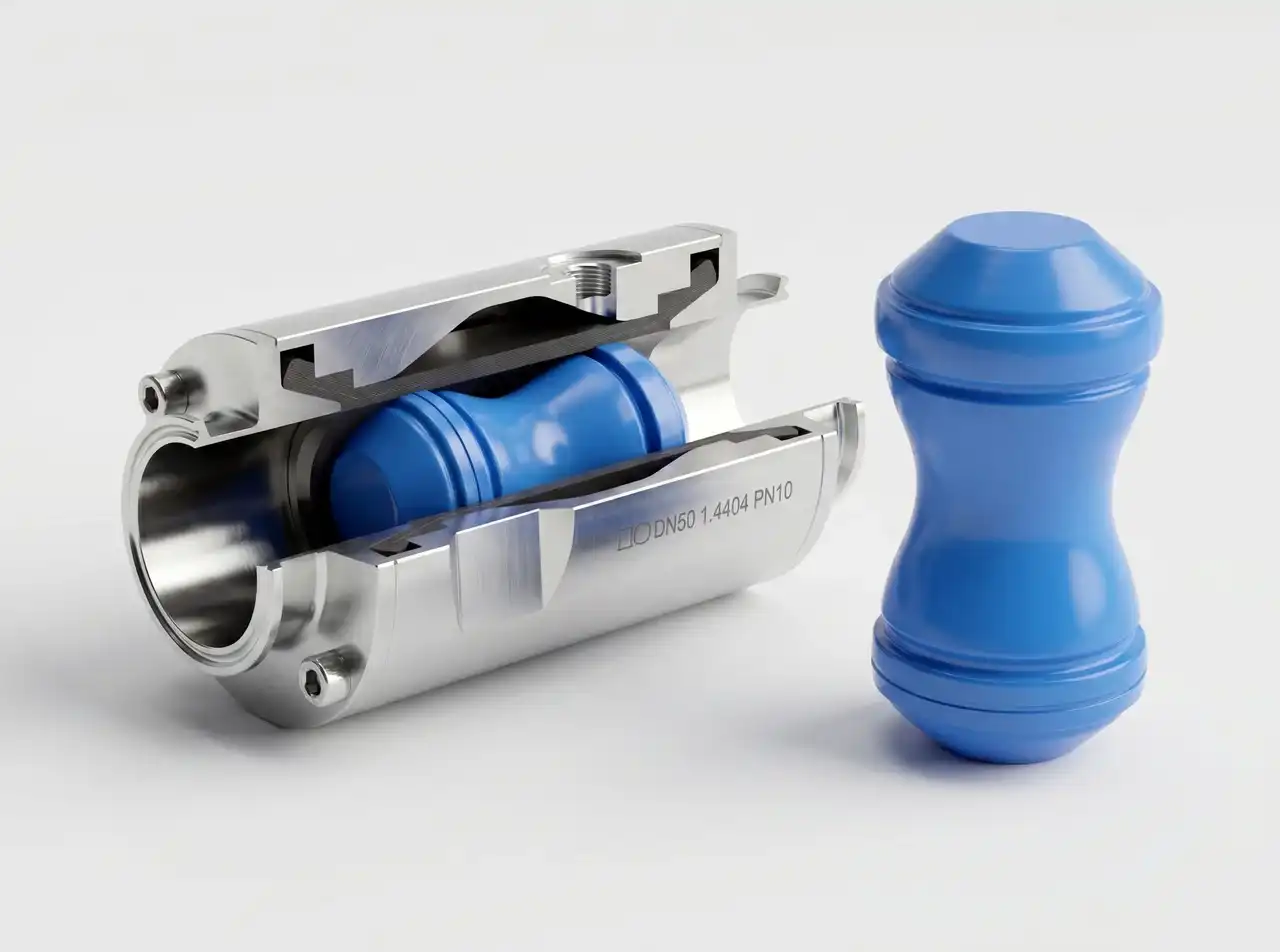
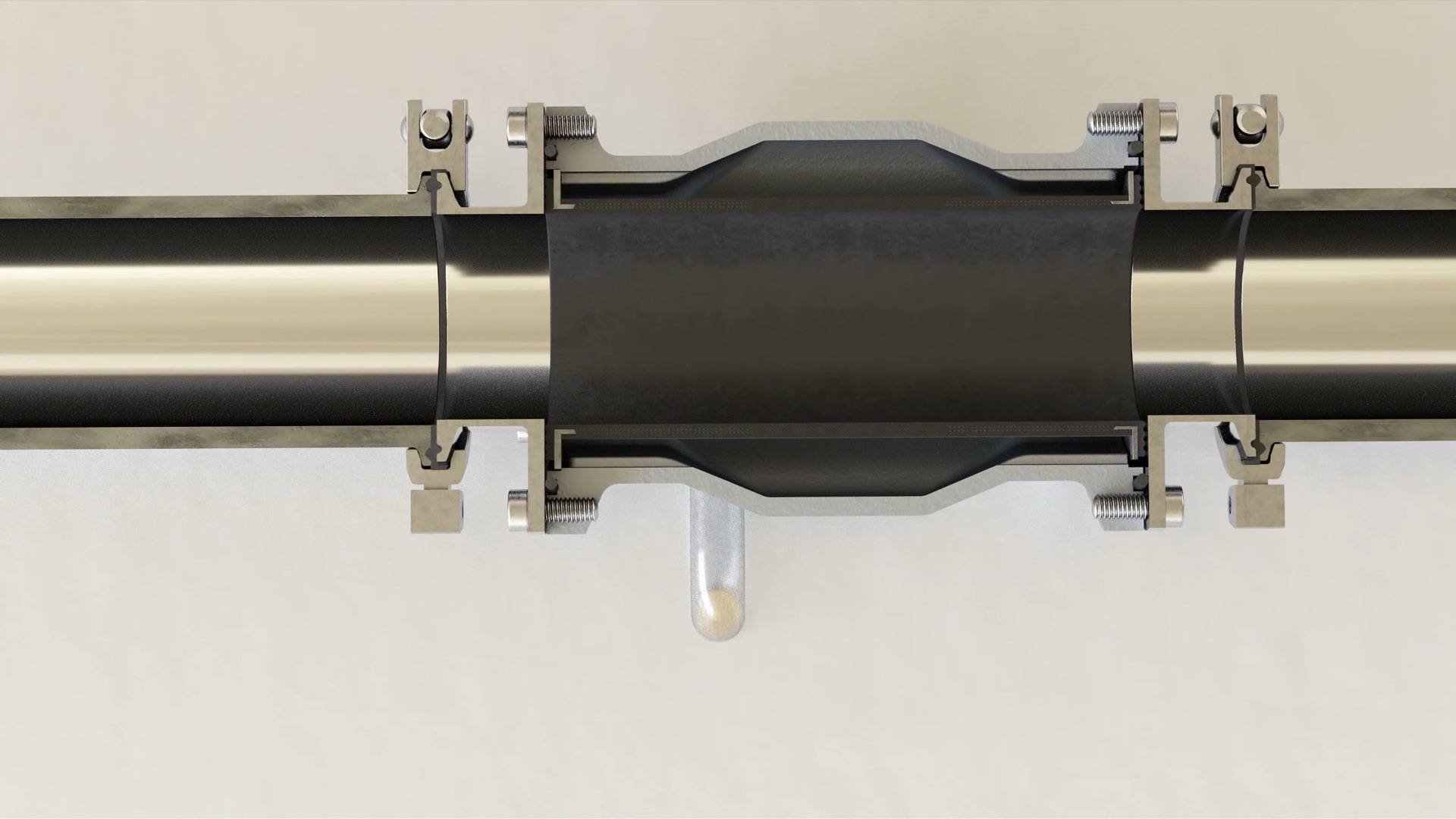
- Pinch valves: In the open state, the passage is a straight length of elastomer tube. No seat faces, no undercuts, no annular gap: by design, there is nothing in which product could settle.
The full pipe cross-section adds to this. Because pneumatic pinch valves do not narrow the line, even viscous sauces, fruit preparations with pieces or grain suspensions pass through without stagnation points. What does not stagnate cannot spoil.
Sleeve Materials: Only the Material Makes the Food-Grade Valve
A pinch valve is not automatically suitable for food use. Only the sleeve is in product contact, and its grade is what decides. That is also the advantage of the principle: material approval is limited to a single component, while body and actuator stay out of it.
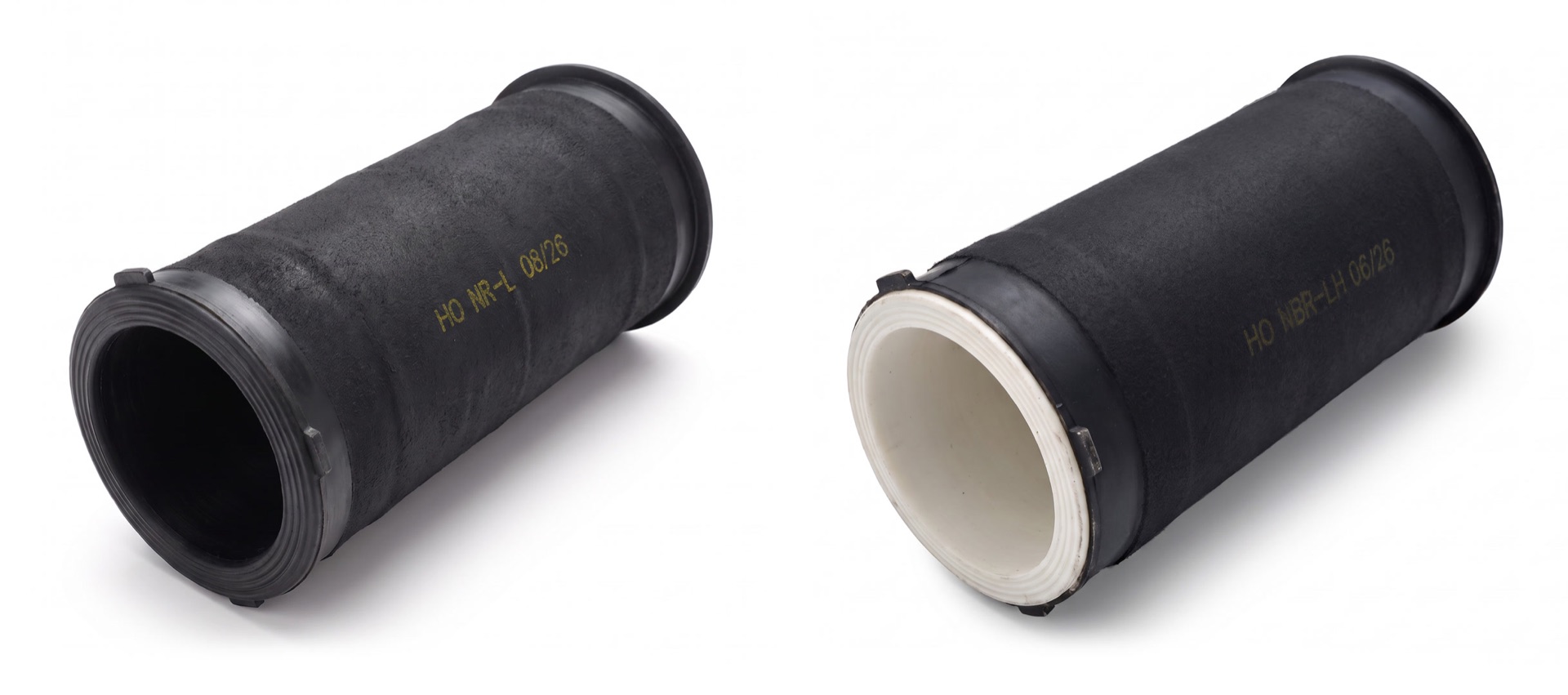
Four grades are options for food and beverage processing. NR-L and the pale NR-LH, made of natural rubber, suit abrasive dry products up to +80 and +70°C respectively. NBR-LH is the choice for fatty products and withstands up to +80°C. EPDM-L covers hot aqueous media and caustic cleaning solutions up to +120°C; above that, silicone takes over for hot filling and steam sterilization. Temperature, fat content and cleaning method decide which sleeve grade fits.
For cleaning, this means the valve stays in the line. Cleaning media and saturated steam flow through the sleeve just as they do through the pipeline, so no disassembly is needed. The plant’s CIP and SIP cycle determines which temperatures and chemicals act on the elastomer.
Where Food-Grade Valves Are Used in Practice
Food-grade valves of pinch design sit wherever the medium brings solids, fibers or high viscosity and valves with sealing seats quickly reach their limits. Typical applications:
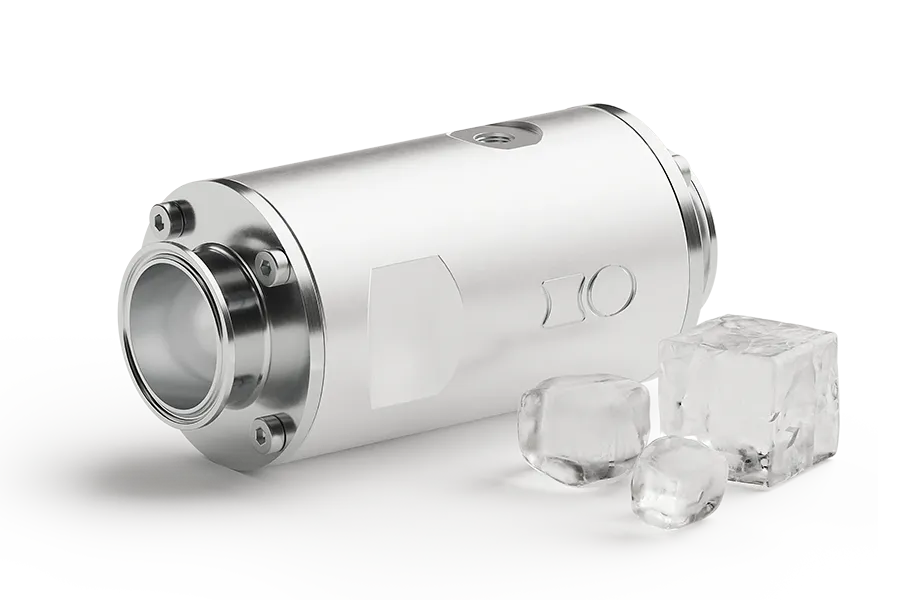
- Filling and dosing: Dairy products, juices, sauces and syrups, also with pieces or fruit pulp.
- Bulk solids and powders: Sugar, salt, spices, grain, nuts and coffee beans in pneumatic conveying systems.
- Difficult media: Foaming liquids, mash, pomace and abrasive suspensions.
There are also applications for which a pinch valve is not the right choice. With media pressures continuously above 6 bar or temperatures above 130°C, the elastomers reach their design limits. Another valve concept makes more sense then. Honest sizing saves sleeve changes later.
Solenoid Valve in a Food Plant: What Is Actually Meant?
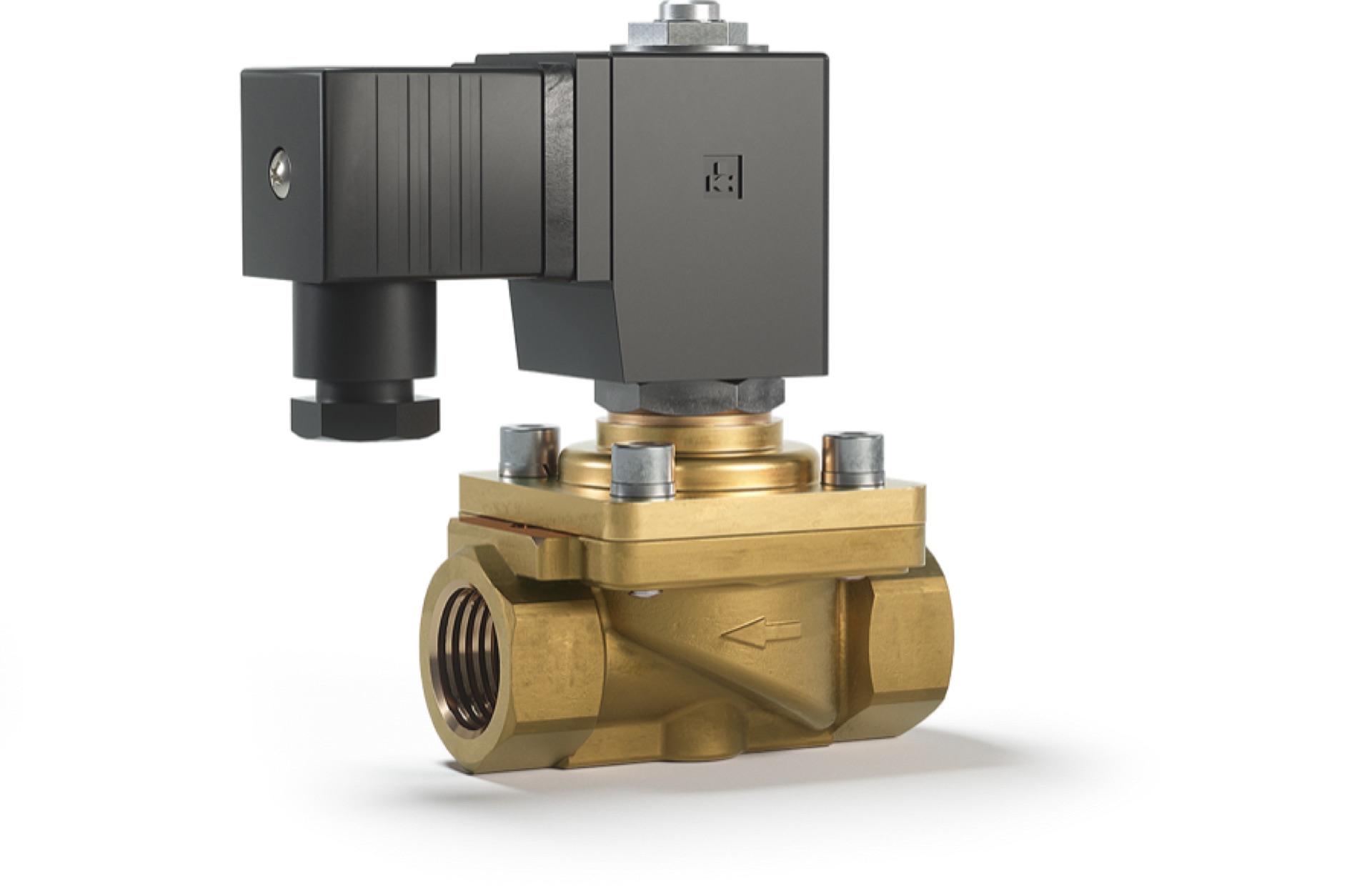
The search for a food-grade solenoid valve leads to two different components. It can mean a solenoid valve that switches the food itself: its internal parts then have to meet the same material requirements as any other food-grade valve. Or it means the solenoid valve that switches the control air of a pneumatic pinch valve.
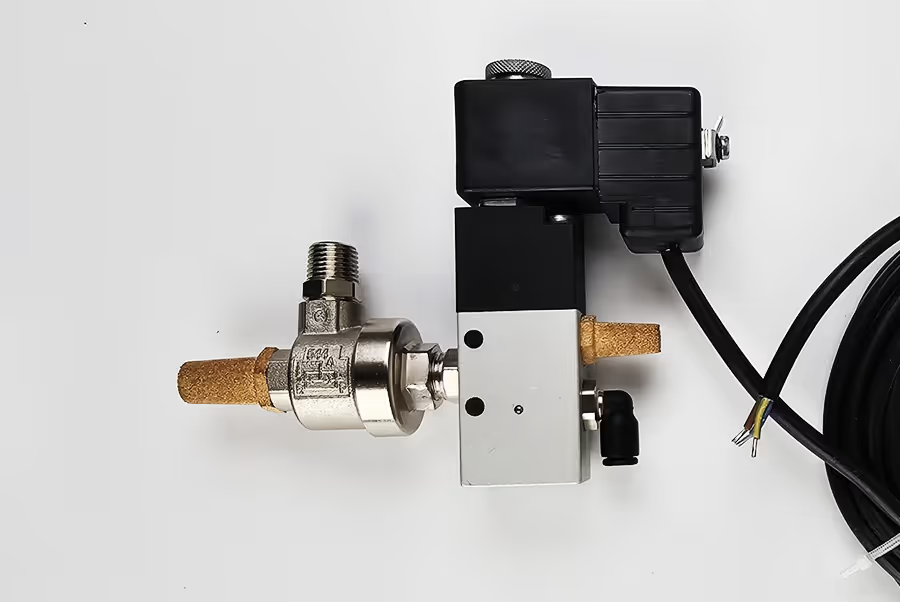
In the second case, the solenoid valve never touches the product. It sits in the control air line and therefore needs no food approval, but it does need proper sizing, because control pressure and switching behavior determine the service life of the sleeve. At HO-Matic, solenoid valve, pressure regulation and quick exhaust therefore belong to the valve as pneumatic valve control.
Hygienic Pinch Valves from HO-Matic
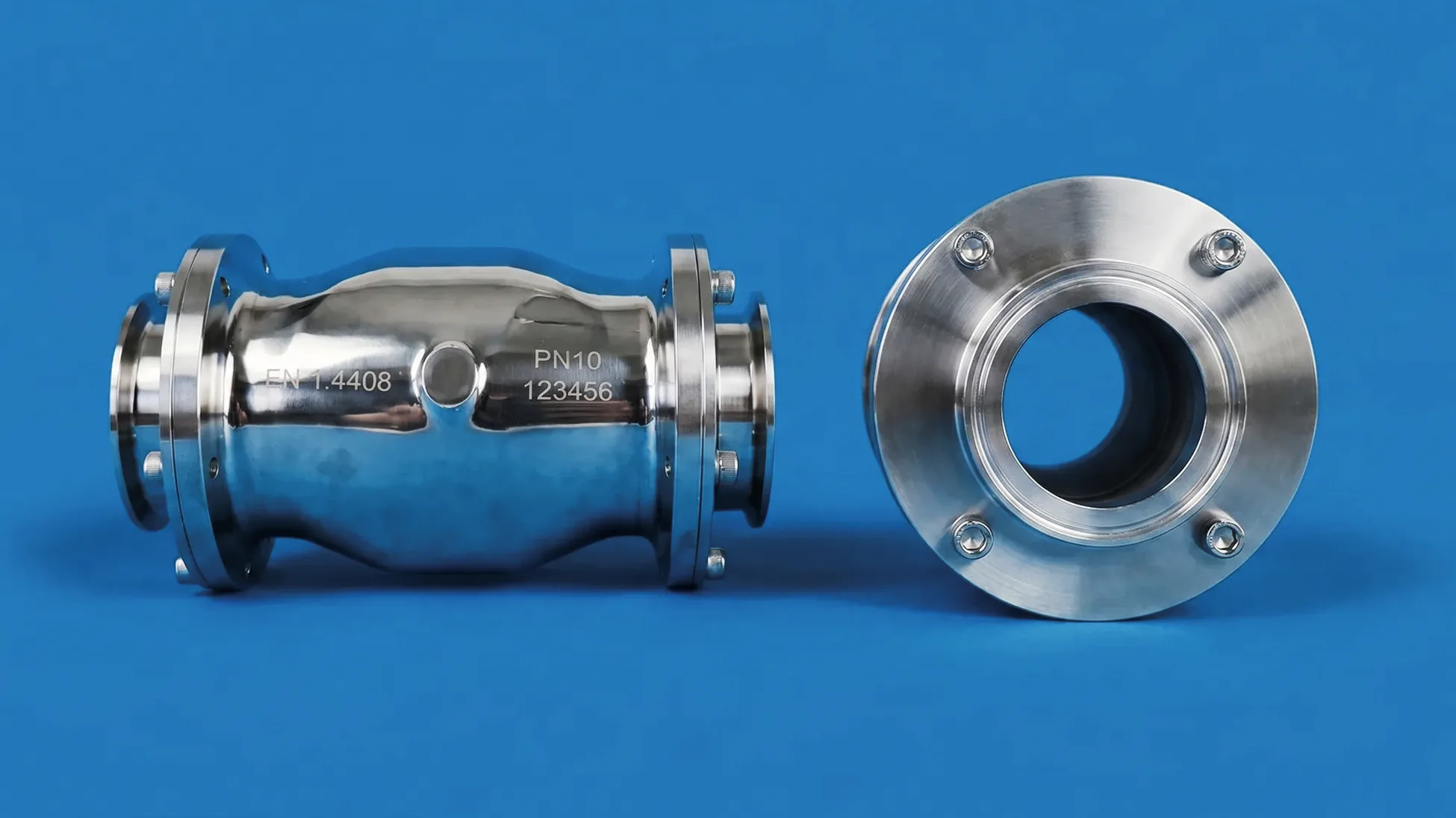
Since 1977 we have been developing and manufacturing pneumatic pinch valves in Switzerland. For beverage and food production, stainless steel series with hygienic connections are available as food-grade valves: Tri-Clamp to DIN 32676, milk pipe connection and threaded and flanged versions from DN 6 to DN 150.
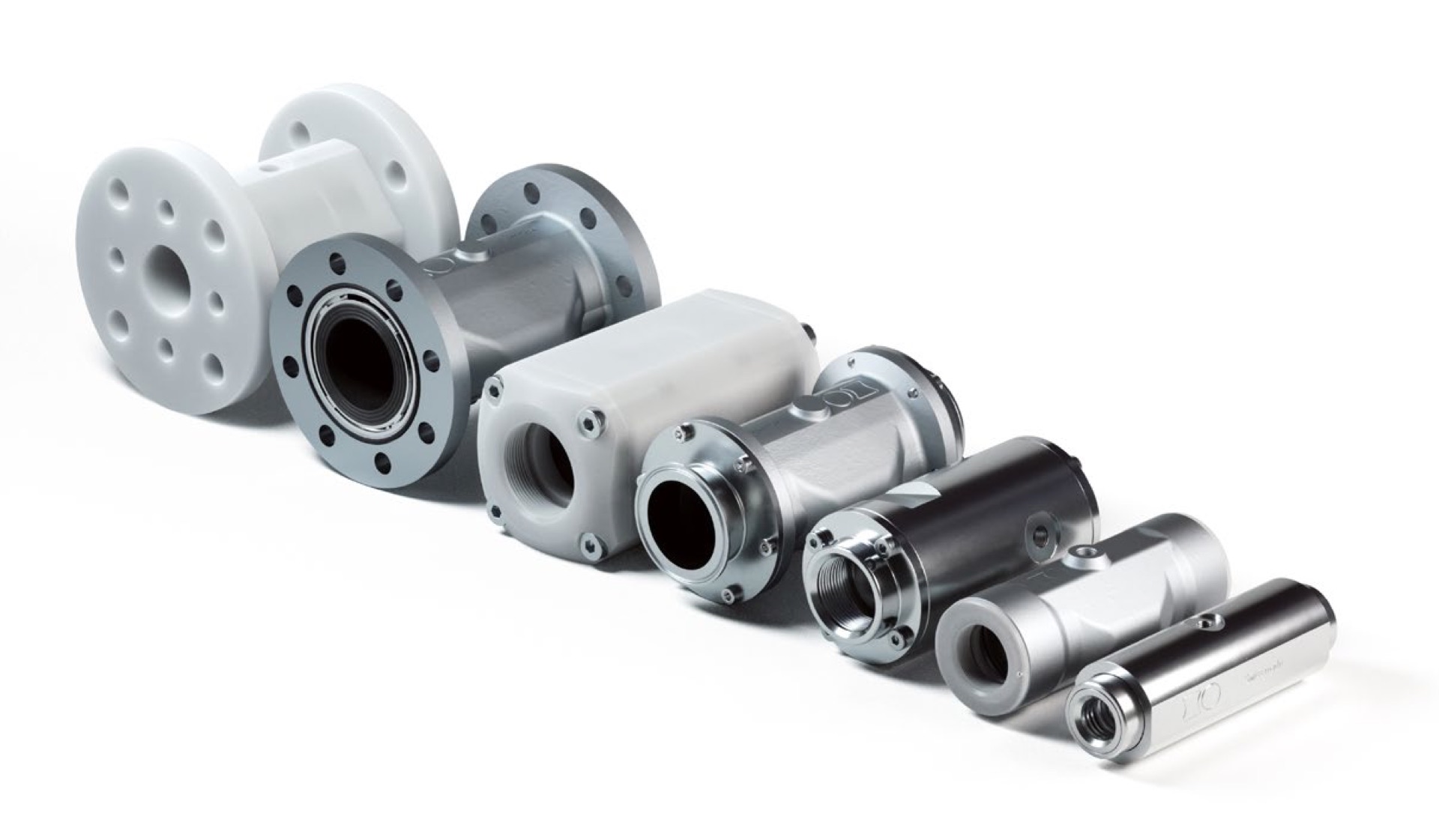
A sleeve change takes five to twenty minutes depending on the design, on most series without removing the valve from the line and without special tools. If no standard face-to-face length fits the plant, we manufacture custom pinch valves, even in small quantities.
Describe your medium, temperature and cleaning method, and we will size the right food-grade valve.
FAQ: Food-Grade Valve
What Is a Food-Grade Valve?
A food-grade valve is a valve for food and beverage production in which all wetted materials are approved for food contact and the design forms no dead spaces. Together, the two ensure that no product residues remain in the valve and no biofilms can form.
When Is a Valve Considered Food-Grade?
When material proof exists for every component in product contact. FDA 21 CFR applies for the US market, and EC 1935/2004 with EU 10/2011 for Europe. In sensitive processes, USP Class VI is added. The approval applies to the material, not to the valve as a whole.
Why Are Dead Spaces in Valves a Hygiene Risk?
Because the cleaning flow does not reach them. Product residues remain in cavities behind sealing seats or in annular gaps, and a CIP cycle does not flush them out. Biofilms form there, leading to cross-contamination and shortened shelf life. In validated plants, every dead space is also an audit point.
Is a Pinch Valve Suitable for Food Use?
With the right sleeve grade, yes. The pinch valve is dead-space-free by design, and product contact is limited to the sleeve. If the sleeve is made in an FDA-compliant grade such as NR-LH, NBR-LH, EPDM-L or silicone, the valve meets the requirements of food processing.
Which Sleeve Material Suits Food Applications?
NR-L and NR-LH for abrasive dry products up to +80 and +70°C respectively, NBR-LH for fatty products up to +80°C, EPDM-L for hot aqueous media and caustic cleaning solutions up to +120°C. Silicone is available for hot filling and steam sterilization above that limit.
Does a Solenoid Valve in the Food Industry Need an Approval?
Only if it switches the food itself. The solenoid valve of a pneumatic valve control, by contrast, sits in the control air line and has no product contact: here, what counts is the correct sizing of control pressure and switching behavior, not the food approval.