 HO-Matic Editorial Team
Abrasive solids, frequent product changes and tight cleaning windows push process valves to their limits. With a diaphragm valve, what decides the outcome is not manufacturing quality but geometry: on every stroke the diaphragm flexes over a fixed edge, and on every pass the medium is deflected twice. For engineers and designers, this is a question of flow path and process safety. For purchasing, it is a question of purchase price, maintenance and downtime.
This article explains how a diaphragm valve is built, which designs are available and where its inherent disadvantages lie. It also covers when the switch to a pinch valve pays off, paired with concrete decision criteria from our day-to-day work at HO-Matic.
What Is a Diaphragm Valve? Design and Function
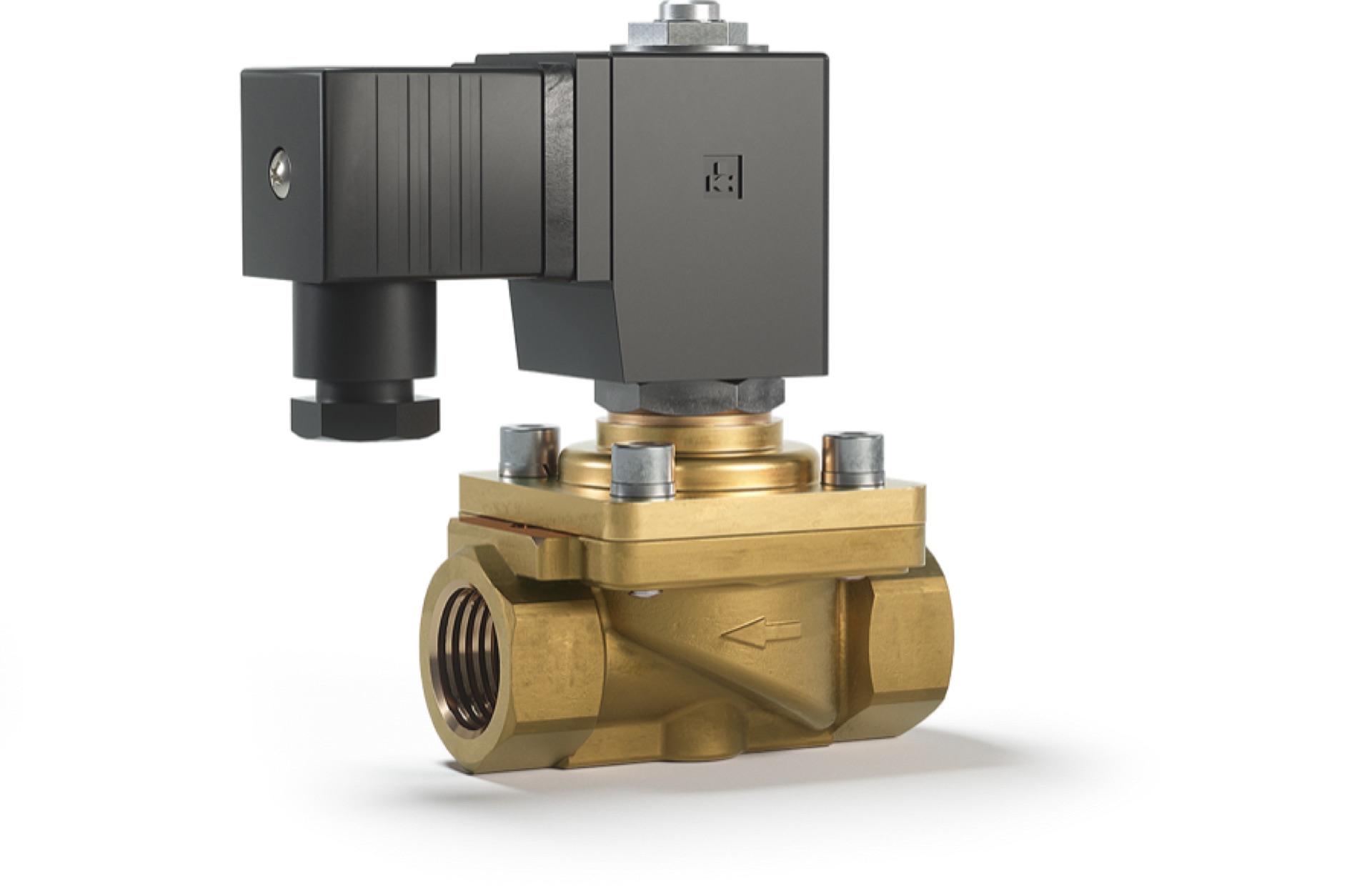
A diaphragm valve shuts off the flow with an elastic sealing element. It consists of two basic parts: a valve body with a weir, and a flexible diaphragm. An actuator presses the diaphragm from the outside against the weir and interrupts the flow. Once the actuating pressure falls away, the diaphragm lifts and opens the cross-section again.
A diaphragm valve shares its basic principle with the pinch valve: in both, an elastomer shuts off the flow rather than a metal plug or ball. The difference lies in the geometry. In the one, the diaphragm works against a fixed weir. In the other, a continuous sleeve deforms across the entire cross-section. That one difference shapes flow behavior, cleaning and service life. It further explains why the two designs behave so differently in operation.
Diaphragm Valve Designs: Which Types Are Available?
Diaphragm valves differ mainly in actuator and material. The common weir-and-diaphragm construction stays identical across these versions. Alongside it there are straight-through designs without a weir, which do away with the change of direction but need a larger diaphragm that is placed under greater stress.
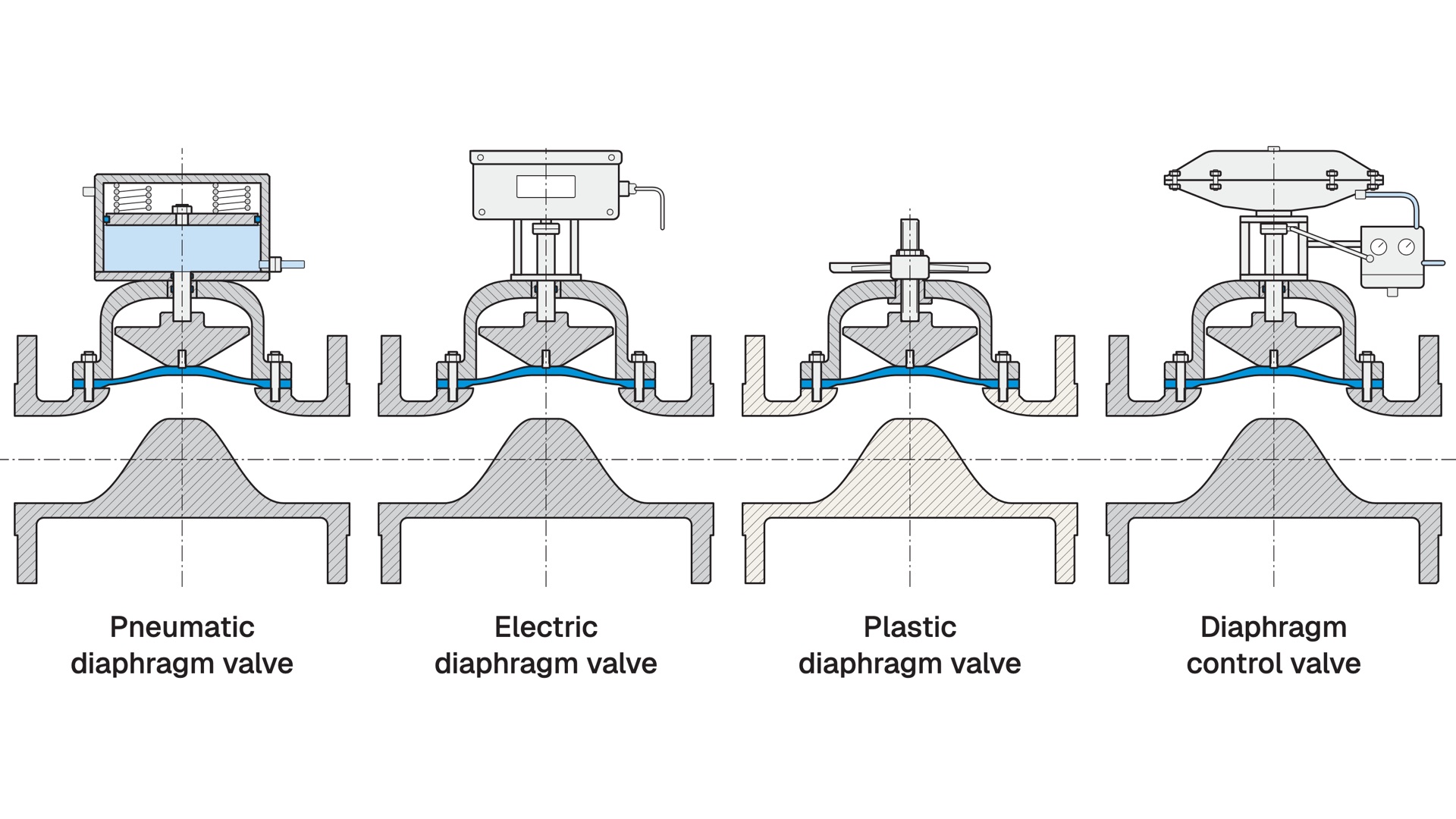
Pneumatic Diaphragm Valve
A pneumatic diaphragm valve uses compressed air as its actuating energy. The actuator switches fast and repeatably, which makes this version a good fit for cycled processes and high switching rates. Typical applications are filling lines, CIP circuits and dosing stations. A compressed air diaphragm valve needs a stable supply in the range of 4 to 8 bar.
Electric Diaphragm Valve
This version uses a motor or solenoid actuator. The advantage lies in fine positioning and straightforward integration into control systems. Plants without a compressed air network often choose this version, as do processes with slow actuating movements.
Stainless Steel Diaphragm Valve or Plastic Diaphragm Valve
A stainless steel diaphragm valve handles high temperatures, pressures and cleaning cycles. Pharmaceuticals, biotechnology and food production rely on it. A plastic diaphragm valve in PP, PVDF or PTFE scores on aggressive chemicals, acids and alkalis as well as on weight and price. The body material, however, changes nothing about the flow path.
Diaphragm Control Valve
It takes on metering and control duties instead of a pure open/close function. Combined with a positioner and position feedback, it holds defined flow rates. Processes with variable volume flows benefit from this.
Whatever the actuator and the material: the fundamental structural weaknesses do not sit in the actuator, but where diaphragm and weir meet.
What Are the Disadvantages of a Diaphragm Valve?
The disadvantages of a diaphragm valve follow from its geometry, not from manufacturing quality. Five points shape day-to-day operation:
- Restricted cross-section: The weir narrows the free bore in the valve area. The pump compensates with higher output, and energy consumption rises.
- Deflection of the flow: The medium passes over the weir and changes direction twice. Pressure drop and turbulence follow.
- Transition at the weir: The weir plus the pressed-on diaphragm inevitably form an edge. Complete freedom from cavities is therefore unattainable, unlike the continuous sleeve bore of a pinch valve.
- Wear from friction: The diaphragm flexes over the weir on every stroke. Abrasive media accelerate material loss on both components, though the weir cannot be replaced separately.
Diaphragm Valve vs. Pinch Valve: The Direct Comparison
Both designs shut off with an elastomer, but they differ in flow geometry, material contact and maintenance effort. The table sets out the differences that show up in operation:
| Criterion | Diaphragm valve | HO-Matic pinch valve |
|---|---|---|
| Shut-off element | Diaphragm, pressed from the outside against a fixed weir | Continuous elastomer sleeve that is pinched closed |
| Flow path | Deflection over the weir, restricted cross-section | Straight through with the full pipe bore |
| Cavity | Edge at the transition between weir and diaphragm | Completely free of cavities |
| Wetted parts | Body, weir and diaphragm | One part only: the sleeve |
| Wear with abrasive media | Material loss on diaphragm and weir | The sleeve as the only wear part |
| Maintenance | Diaphragm replacement, often with removal of the valve. A worn weir is part of the body and cannot be replaced | Sleeve change in minutes, usually without removing the valve |
| Availability | depends on manufacturer and series | over 8,000 versions, 99% shipped within 24 hours |
In practice, three criteria decide which design suits the process.
Flow Path and Freedom from Cavities
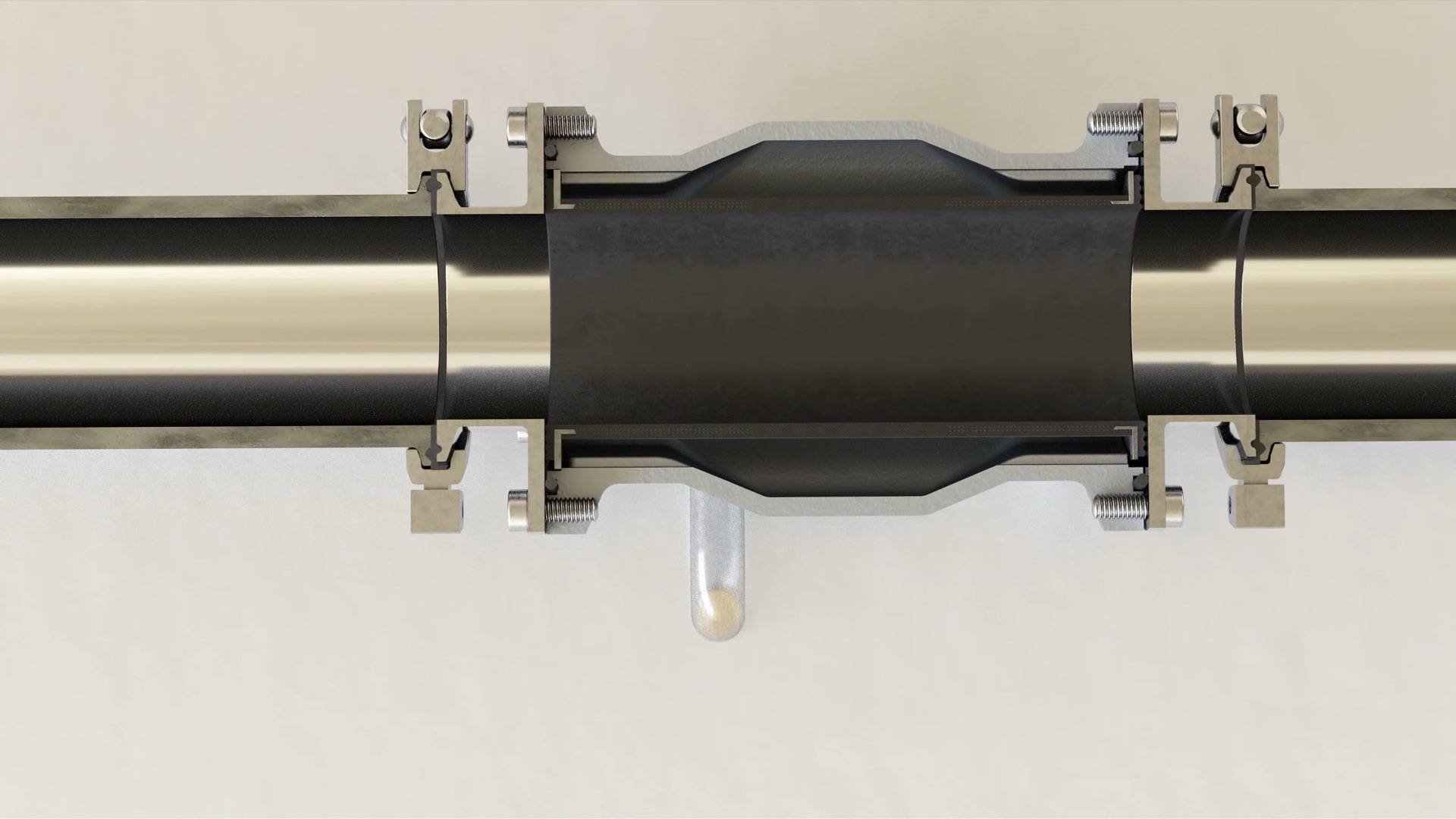
An HO-Matic pinch valve guides the medium through a continuous elastomer sleeve with the full pipe bore. The medium runs straight through, with no deflection and no edge. This is where diaphragm valve and pinch valve differ fundamentally: in one the medium flows over a weir, in the other through a smooth tube. For CIP processes and product changes, that means shorter cleaning times and fewer places where residues can settle.
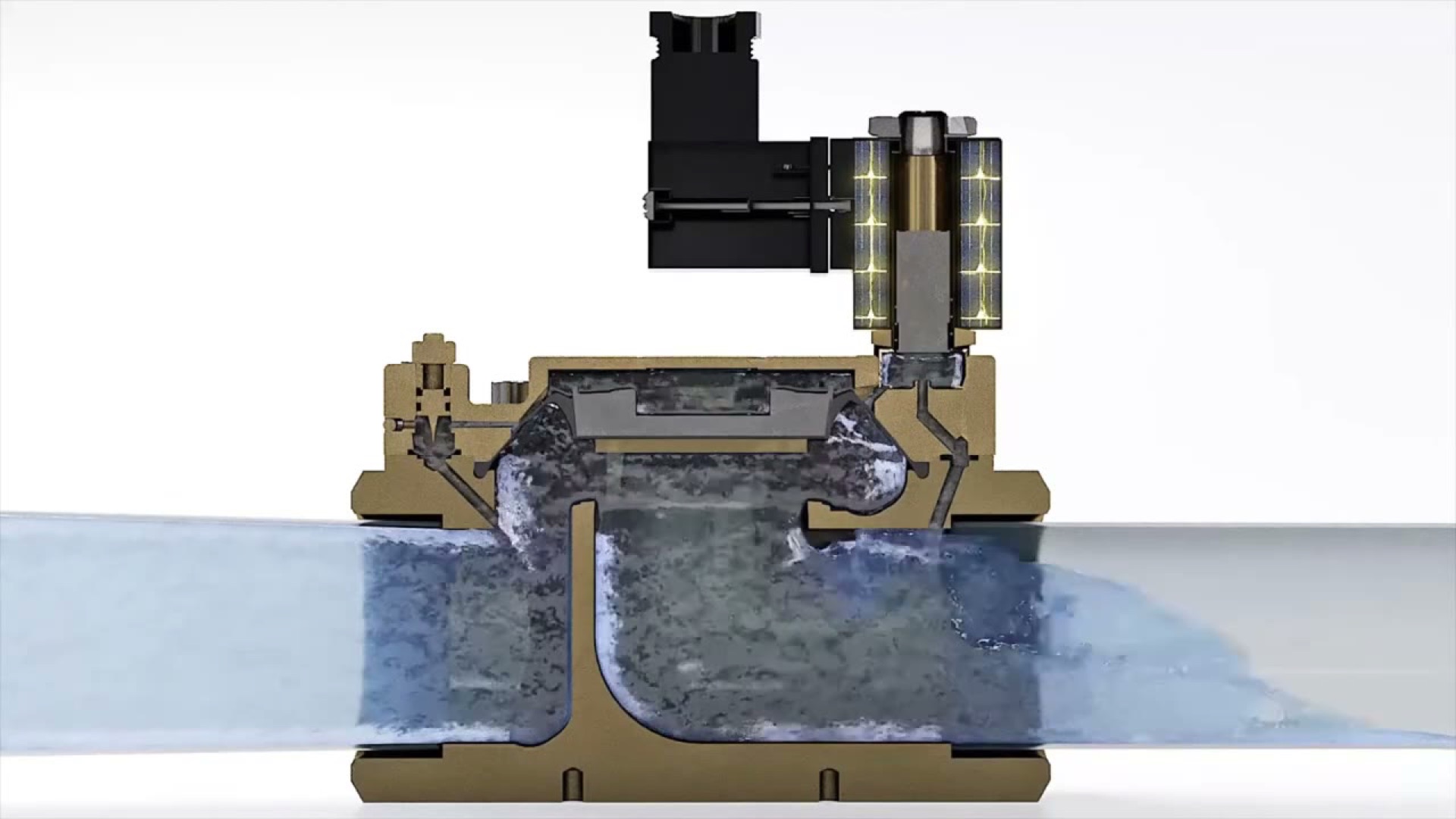
Process Safety and Material Contact
In our pinch valves, exactly one part touches the product: the sleeve. Body, actuator and seals stay outside the wetted area. That narrows the contamination paths to a single controlled material and simplifies every material approval. We source all base materials from verified sources and manufacture in Switzerland, in the heart of Europe.
Maintenance and Life Cycle Costs (TCO)
The sleeve is the only wear part. Fitting replacement sleeves takes a few minutes with standard tools, on most series without taking the valve out of the line. Replacing a diaphragm, by contrast, involves both diaphragm and weir and often means removing the valve. Over five years of operation, that difference shifts the total cost of ownership considerably, even at a higher purchase price.
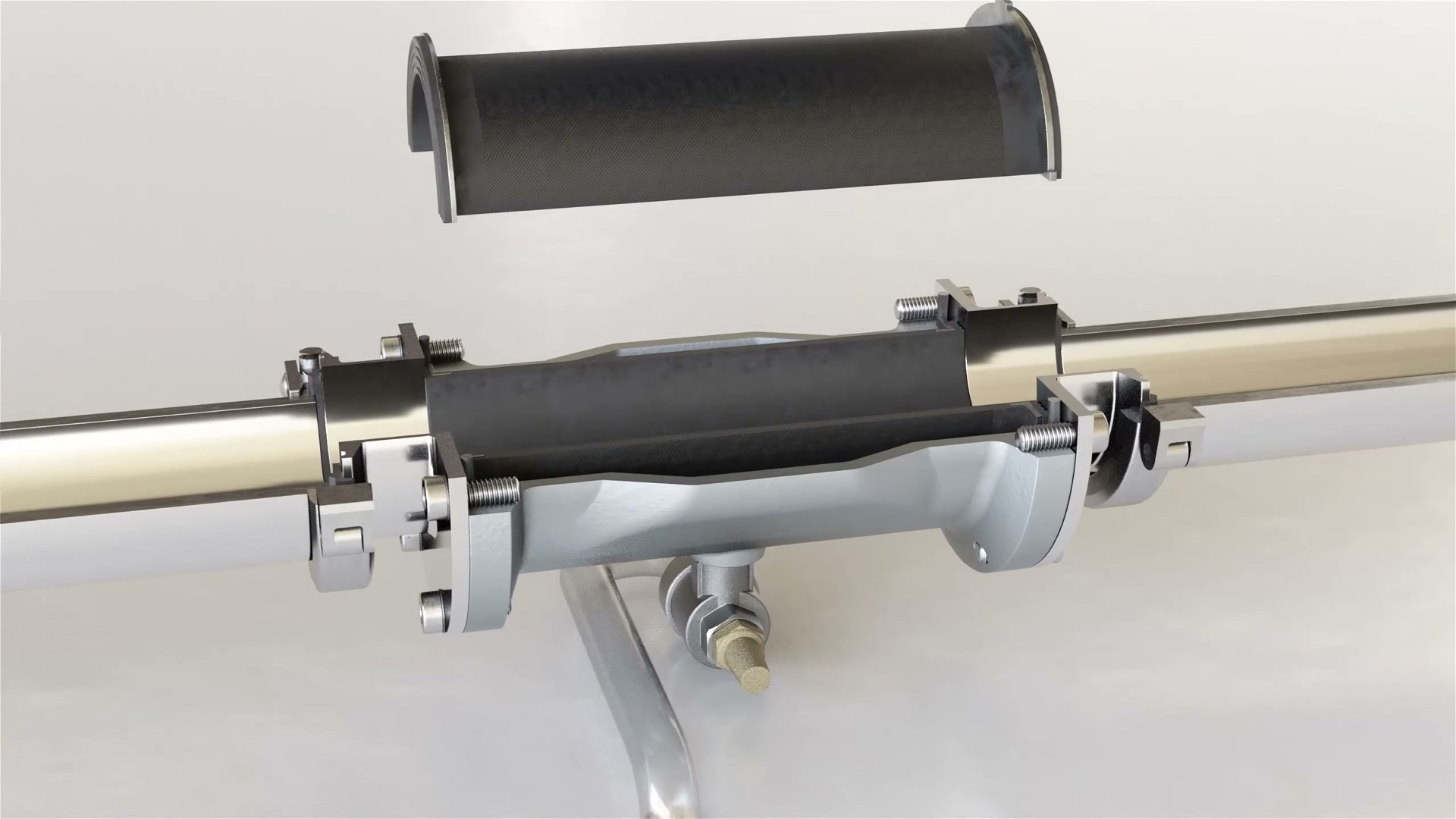
HO-Matic Pinch Valves: The Cavity-Free Alternative to the Diaphragm Valve
Since 1977 we have been developing and manufacturing patented pneumatic pinch valves for processes in which conventional valves wear out, clog or force elaborate maintenance cycles. Compared with a diaphragm valve, they offer:
- The full pipe bore, with no restriction and no deflection of the medium
- Complete freedom from cavities for CIP processes and fast product changes
- A single wetted part: the sleeve
- Sleeve changes in a few minutes without special tools
- Over 8,000 versions from a modular system, 99% shipped within 24 hours
If no standard version matches the installation, we engineer custom pinch valves from small batch sizes upwards. Our engineering team matches connection type, face-to-face length and sleeve material to your process.
Replacing a Diaphragm Valve: The Decision in Five Steps
Five questions narrow down whether the switch is worth it:
- Analyze the medium: Does it contain abrasive solids, fibers or larger particles? The more heterogeneous the product, the harder the flexing wear of the diaphragm impacts the weir.
- Check the hygiene requirement: Where CIP cleaning, frequent product changes or batch purity come first, complete freedom from cavities is what counts.
- Assess the pressure drop: How much pressure is lost in the deflection at the weir, and how much pump power does that cost in continuous operation?
- Plan for maintenance: How often is a diaphragm change due, how long does it take, and does the valve have to come out of the line for it?
- Calculate total cost: Purchase, spare parts, installation time, energy and downtime over five years instead of the procurement price alone.
As a rule of thumb: the more abrasive the medium, the higher the hygiene requirement and the tighter the maintenance window, the more clearly the design argues for the pinch valve. In clean, low-viscosity media and uncritical processes, the diaphragm valve does its job reliably.
Diaphragm Valve or Pinch Valve: Which Is Right for Your Process?
In many standard applications, a diaphragm valve performs dependably. As soon as abrasive media, hygiene requirements or maintenance effort dominate the process, the weir-and-diaphragm design reaches its limits: a restricted cross-section, two changes of direction, an edge at the weir and wear on two components at once.
This is exactly where a cavity-free valve comes in: the full bore with no deflection, a single wetted part, sleeve changes in minutes and delivery within 24 hours from European production.
Would you like to find out whether an existing diaphragm valve can be swapped for an HO-Matic pinch valve? Our engineering team matches connection type, face-to-face length and sleeve material so that you do not have to rebuild your plant.
FAQ: Diaphragm Valve
How Does a Diaphragm Valve Work?
A diaphragm valve shuts off the flow by pressing an elastic diaphragm from the outside against a fixed weir in the valve body. When the actuating pressure drops, the diaphragm lifts and opens the cross-section again. Depending on the design, the actuating energy comes from compressed air, an electric motor or a solenoid actuator. The medium always flows over the weir and is deflected twice.
Is a Diaphragm Valve Free of Cavities?
Only to a limited extent. The weir and the pressed-on diaphragm inevitably form a transition, which puts a completely smooth bore out of reach. Residues and particles settle more easily in these border areas. HO-Matic pinch valves work with a continuous sleeve and are therefore completely free of cavities.
What Is the Difference Between a Diaphragm Valve and a Pinch Valve?
A diaphragm valve combines a weir with a diaphragm that is pressed down from the outside. A pinch valve uses a continuous, flexible sleeve that is pinched closed. In a pinch valve only one part touches the product; in the other, several do. The result is freer flow, higher process safety and better CIP suitability.
What Is a Diaphragm Control Valve?
A diaphragm control valve is a special version for metering and control duties rather than pure open/close switching. It regulates the flow rate more finely and often works with a positioner or position feedback. Typical applications are processes with variable flow requirements.
Which Media Does a Diaphragm Valve Not Suit?
Strongly abrasive and fibrous media accelerate wear on weir and diaphragm. Processes with strict hygiene requirements suffer from the cavity issue. Viscous or heterogeneous media with larger particles tend to form deposits in the weir area.
Are There Stainless Steel and Plastic Diaphragm Valves?
Yes, both versions are available depending on the application. Stainless steel offers higher resistance for pharmaceuticals, food and aggressive media. Plastic is lighter and cheaper and suits less demanding processes. The material choice follows the medium, the pressure and the hygiene requirements.
How Long Does the Diaphragm in a Diaphragm Valve Last?
There is no blanket service life: medium, switching frequency, temperature and differential pressure determine it. Abrasive and fibrous media shorten it considerably, because the diaphragm flexes over the weir on every stroke. For planning purposes, what counts alongside service life is above all the effort per change: with this design both diaphragm and weir are affected, often including removal of the valve.
When Does Switching from a Diaphragm Valve to a Pinch Valve Pay Off?
The switch pays off where maintenance and cleaning cycles are frequent, and with abrasive, fibrous or heterogeneous media. Where process safety and freedom from cavities are critical, the design argues clearly for the pinch valve. Calculate with total cost rather than purchase price alone and the balance shifts further still.