 HO-Matic Editorial Team
Process valves control the flow of medium in industrial plants and therefore decide process stability, cleanability and operating costs. Designers select on the basis of flow rate, pressure, temperature and type of medium. Purchasing weighs up delivery capability, spare part availability and total cost over the service life. It gets difficult whenever the medium is not clean and thin, but sticky, carries fibers or contains solids.
This article explains what defines process valves, which designs exist, the criteria you select by, how process control valves differ and which requirements a hygienic process valve has to meet.
What Are Process Valves and Where Are They Used?
Process valves are the umbrella term for shut-off, control and special valves in industrial plants. The job is always the same: stop, release or meter the flow of medium. Actuation is automated, with compressed air or an electric actuator, or manual, with a handwheel or lever.
They are at work in almost every industry that runs fluid or solids processes:
- Chemical plants handle aggressive media.
- The food industry works with viscous products and products containing solids.
- Pharmaceutical processes depend on maximum cleanability.
- Building materials plants meter abrasive bulk solids.
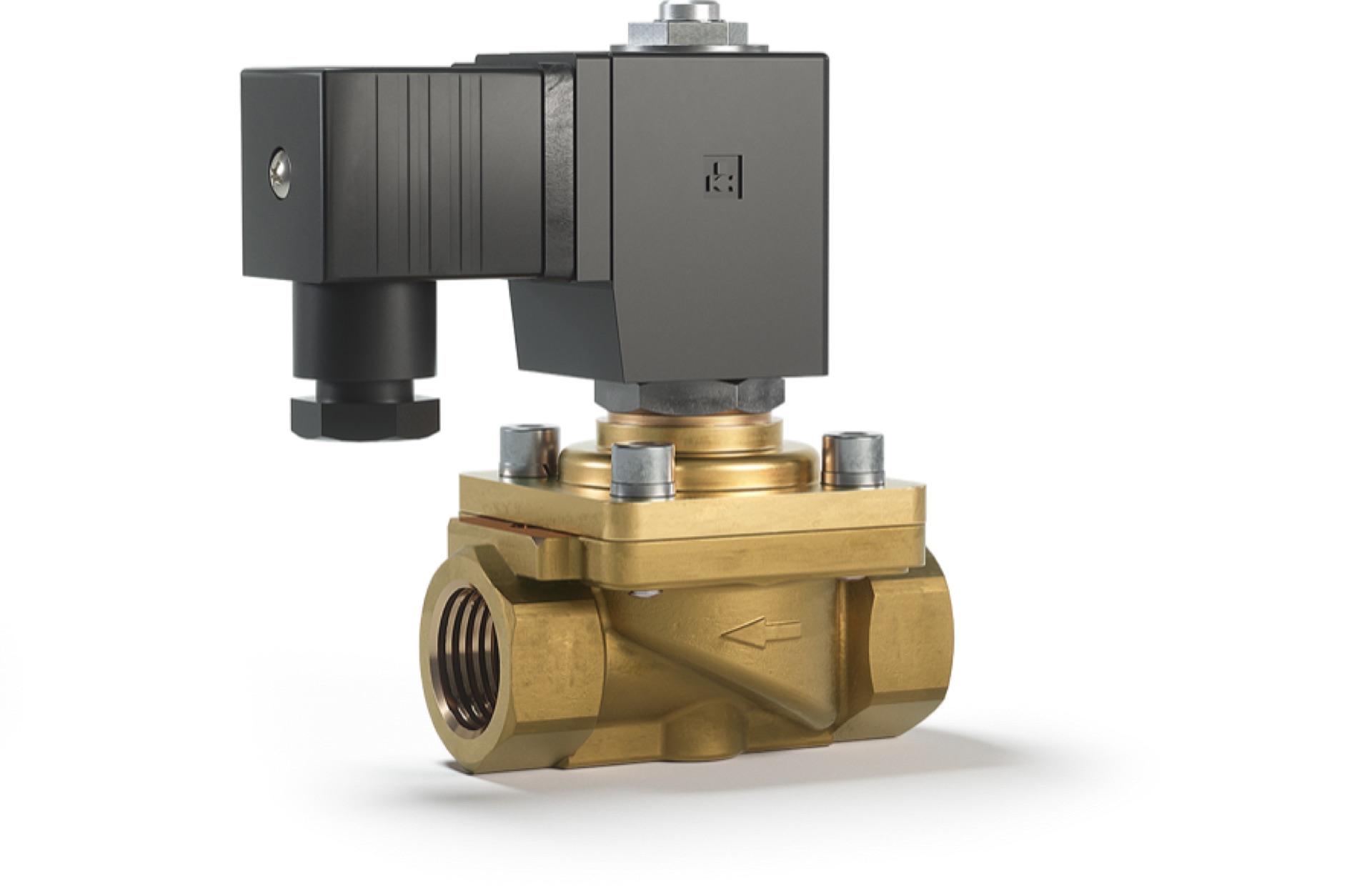
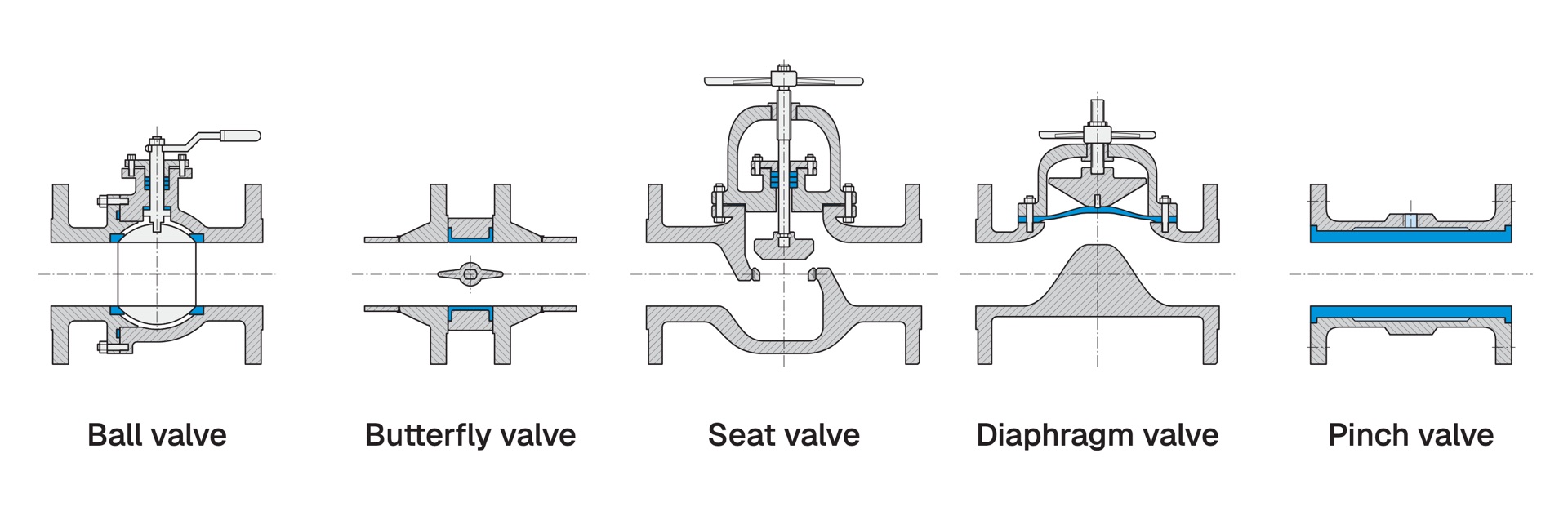
The common designs are ball valves, butterfly valves, seat valves, diaphragm valves and pinch valves. Each design brings its own flow geometry, and it is precisely that geometry which determines the behavior with difficult media.
Which Types of Process Valves Are There?
The table sorts the common designs by flow geometry and shows what each one is suited to.
| Design | Flow geometry | Suitability for heterogeneous media | Typical duty |
|---|---|---|---|
| Ball valve | Gap between ball and body | limited, deposits in the gaps | fast shut-off |
| Butterfly valve | Disc permanently in the flow path | limited, the disc acts as an obstruction | shut-off at large nominal diameters |
| Seat valve | Deflection over seat and plug | low, gap at the transition | shut-off and control of clean media |
| Diaphragm valve | Deflection over the weir | medium, edge at the diaphragm | shut-off in hygienic processes |
| Pinch valve | Continuous sleeve, full pipe bore | high, nowhere for deposits to form | shut-off and metering of difficult media |
What Matters When Selecting Process Valves?
Six criteria narrow down the right design:
- Flow rate: Define the volume of medium per unit of time. The free cross-section of the valve determines the pressure drop and with it the pump power you need.
- Pressure: Operating and peak pressure load the body and the sealing element. Pressure surges in cycled plants raise the real load considerably.
- Temperature: The temperature range drives the choice of material for body, elastomer and seals. Cleaning cycles using hot water or steam raise the upper limit.
- Type of medium: Aggressive, abrasive, viscous, heterogeneous and hygienically sensitive media each make different demands. Solids content and fiber content belong in every specification.
- Nominal diameter: The valve has to match the existing pipework, including connection type and face-to-face length.
- Controllability with heterogeneous media: This is where the designs part company. Valves with a seat, a plug or a ball narrow the cross-section and create zones where material settles. If the consistency of the medium varies, the control behavior shifts with it.
As a rule of thumb: the cleaner and thinner the medium, the freer your choice of design. As soon as solids, fibers or sticky fractions come into play, the flow geometry decides, no longer the actuator or the price.
Process Control Valves or Process Valves: Where Is the Difference?
A process control valve regulates the flow rate continuously, while a plain process valve switches between the open and closed states.
Pure open/close valves switch fast and are robust. They isolate sections of pipework, release batches or separate parts of a plant. Process control valves, by contrast, hold defined volume flows across the entire control range. A positioner and position feedback keep adjusting the valve position to the setpoint.
Our pinch valves cover both duties. Combined with an electropneumatic proportional valve, they regulate product flow through the closing pressure applied to the sleeve. That gives you one valve for shut-off and metering alike.
Why the Pinch Valve Suits So Many Process Valve Applications
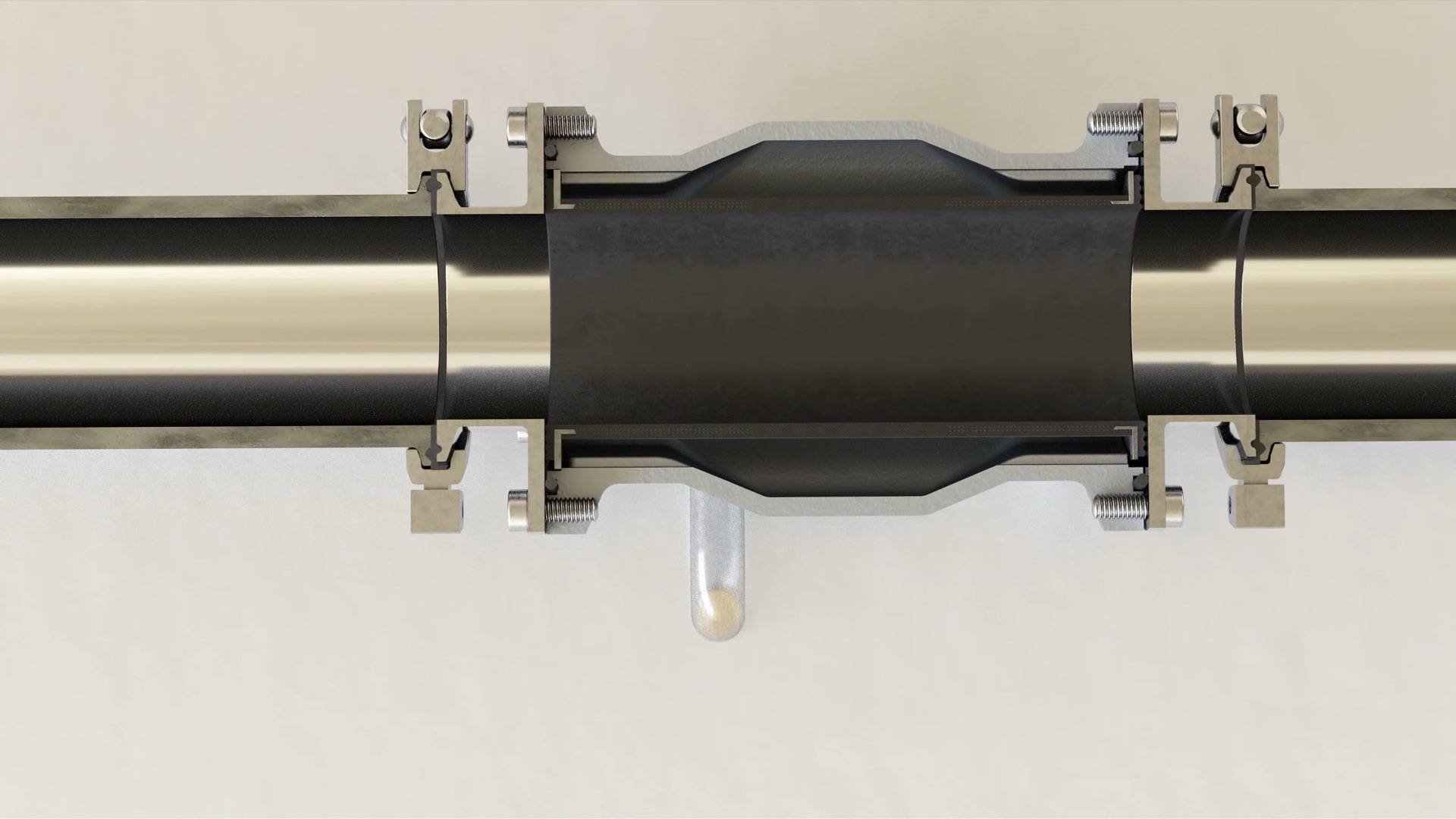
With a pinch valve you run processes with heterogeneous or viscous media particularly reliably, because the medium flows through a continuous, flexible tube.
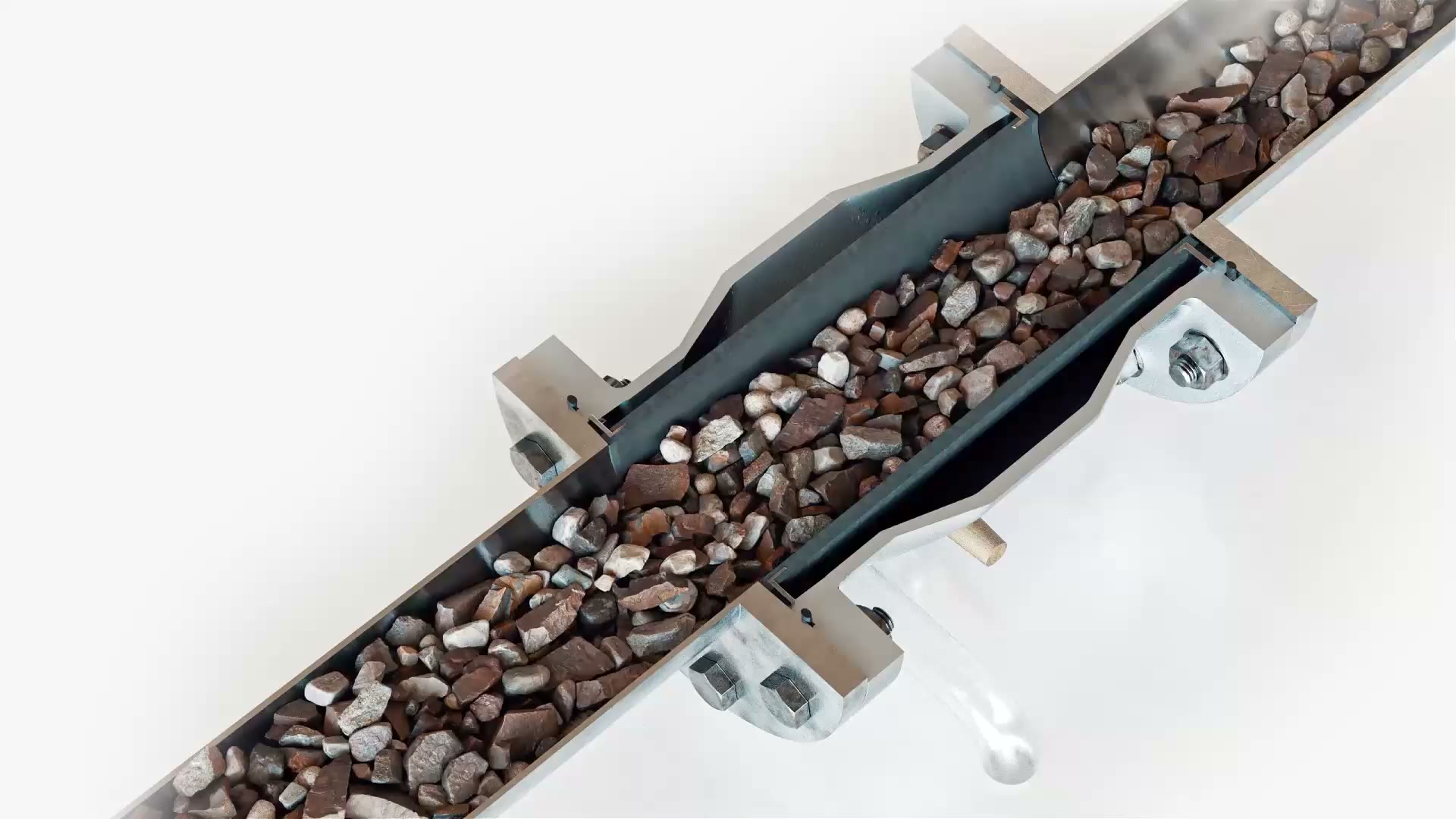
The sleeve for pinch valves replaces seat and plug. When open, the flow cross-section matches the pipe bore and allows a straight flow path. Sticky, fibrous and solids-laden media pass through the valve with nowhere to settle. If the consistency changes during a batch, the control behavior stays reproducible.
Two further effects follow from the design: wear concentrates on a single component, and the actuator stays completely outside the wetted area.
Hygienic Process Valve: Which Requirements Apply?
A hygienic process valve meets three conditions:
- Freedom from cavities
- CIP and SIP capability
- Residue-free cleanability
The internal geometry is what decides. Cavities, undercuts and gaps give bacteria shelter that even intensive cleaning struggles to reach. Food, pharmaceutical and chemical plants validate their cleaning processes, and that calls for valves with a traceable flow path.
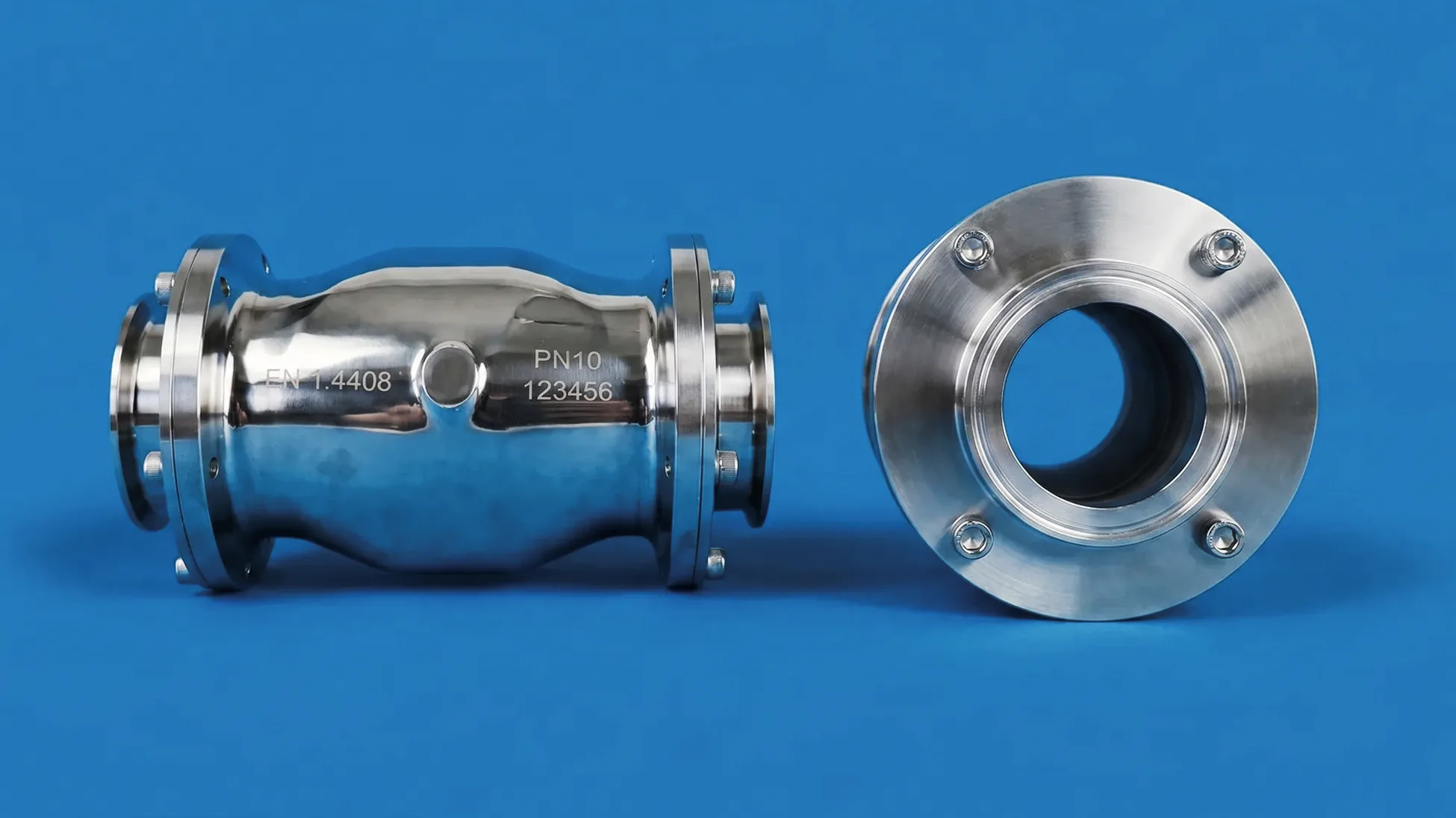
In HO-Matic pinch valves, exactly one component touches the product: the sleeve. Body, actuator and seals stay separate from the product area. We procure all base materials from verified sources and manufacture in Switzerland. Our patented 4x Series goes one step further and works entirely free of oil and grease: the sleeve is simply slid in and twisted into place.
Request a pinch valve solution
Selecting a Process Valve Manufacturer: What Should You Look For?
Compare process valve manufacturers against four criteria: delivery capability, depth of the modular system, technical support and total cost across the life cycle. Ask concrete questions about stock levels and delivery times, about the number of available variants, about direct access to specialists, and about the cost of changing a wear part. Here is how HO-Matic performs on these points:
- Delivery capability: 99% of our products leave the works within 24 hours. A large stock of individual components plus the modular system allow fast assembly, testing and dispatch.
- Patented valve series: Our Series 40/41 and other protected designs solve tasks that wear conventional valves out.
- Custom versions: We build special face-to-face lengths, flange patterns and material combinations from small batch sizes upwards, backed by over 8,000 modular variants.
- Swiss manufacturing: We produce in Affoltern am Albis, in the heart of Europe. That shortens delivery routes and keeps response times short when questions come up.
- Customer service: You speak directly to engineers who understand your application.
Designed by Specialists: Process Valves for Difficult Media
Process valves cover a wide field, and the design decides how stable the process is. Ball valves, butterfly valves and seat valves play to their strengths with clean media. As soon as the product is viscous, fibrous or solids-laden, gaps, edges and narrowed cross-sections shift the result.
Pinch valves guide the product through a continuous sleeve, free of seat and plug, and deliver reproducible results even with demanding products. One wetted part, a sleeve change in minutes, delivery within 24 hours from European production: HO-Matic is the right choice for process valves for difficult media and custom pinch valves.
Would you like to find out which process valve suits your medium? Send us the medium, nominal diameter, pressure and temperature. Our engineering team will size the right valve for it.
FAQ: Process Valves
Which Valve Types Count as Process Valves?
The common designs are ball valves, butterfly valves, seat valves, diaphragm valves and pinch valves. They differ above all in flow geometry: ball, disc, plug or weir sit in the flow of medium, while the sleeve of a pinch valve opens up the full pipe bore. Which design fits is decided first and foremost by the medium.
Is a Ball Valve a Process Valve?
A ball valve is one of the common process valve designs. It suits the open/close function above all and is less suited to fine control. Unlike a pinch valve, the ball forms an additional wetted component on which residues settle.
Can Process Valves Also Be Used as Control Valves?
With an electropneumatic proportional valve or a positioner, process valves take on the control function. That achieves coarse to medium metering of product flow through the closing pressure applied to the sleeve. For high-precision fine control, look at other designs as well.
How Do Process Valves Differ from Plain Shut-Off Valves?
A shut-off valve performs the pure open/close function. Process valve is the umbrella term and takes in control, metering and special functions as well. Process valves are also frequently tailored to specific media and process conditions.
What Is a Hygienic Process Valve?
A hygienic process valve is free of cavities, CIP- and SIP-capable, and can be cleaned without residue. The internal geometry is what settles it: cavities, undercuts and gaps give bacteria shelter. The fewer components touch the product, the easier the cleaning process is to validate and document.
Which Process Valves Suit Abrasive or Solids-Laden Media?
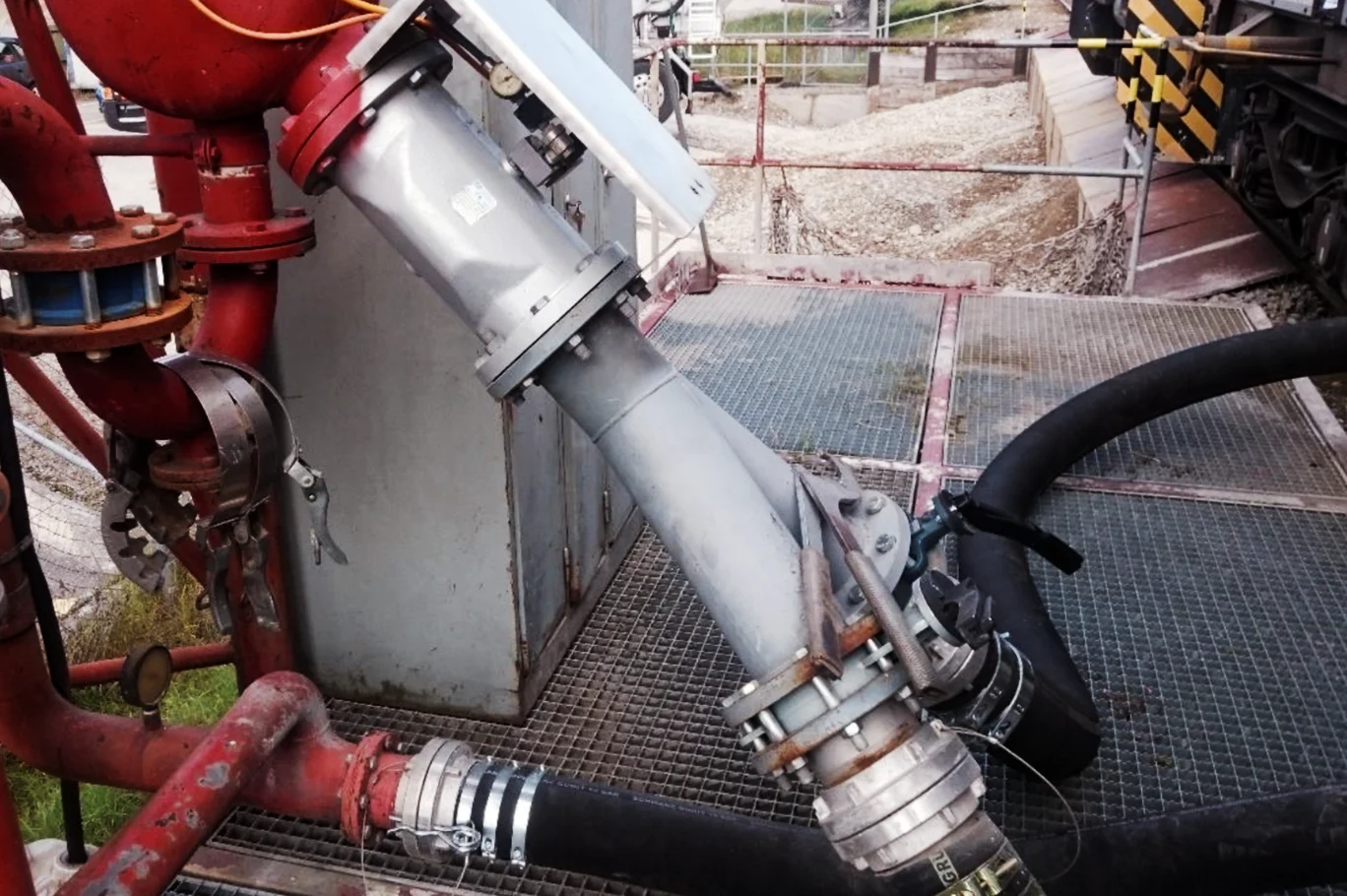
For abrasive and solids-laden media, pinch valves are the best fit, because the product flows through an elastic sleeve with no deflection. There is no seat, no plug and no gap where particles could cause wear or deposits. The sleeve remains the only wear part and can be changed in a few minutes.
How Quickly Can HO-Matic Deliver Process Valves and Process Control Valves?
99% of our products are available within 24 hours. Our large stock of individual components and our modular system are the basis for that availability. We build custom versions from small batch sizes upwards as well.