 HO-Matic Editorial Team
Hot media, steam and aggressive cleaning cycles push elastomers to their limits. In a pinch valve, the sleeve is the only wetted component and therefore the component that sets the permissible process temperature. Conventional rubber grades can be used in the valve up to a maximum of +80 to +120°C. Above that they age faster, harden or soften and lose their recovery force, and the pinch valve temperature turns into the bottleneck of the whole process.
This article explains what maximum temperature a silicone sleeve actually withstands, how the temperature resistance of the sleeve materials compare and when switching to silicone pays off. It further offers concrete limit values from our day-to-day work at HO-Matic.
What Is the Maximum Temperature Silicone Sleeves Can Withstand?
Measured on the material, the maximum temperatures a silicone sleeve can withstand are around +200°C in continuous duty and up to +300°C for short periods. That puts silicone (VMQ) roughly 80°C above EPDM and more than 100°C above natural rubber. Special high-temperature silicones even reach +250°C in continuous duty. At the same time, silicone stays flexible down to -60°C and so covers the widest temperature range of all sleeve elastomers.
One distinction matters for sizing: continuous versus peak temperature. The continuous temperature applies to uninterrupted operation over months and years. The peak temperature describes short loads such as steam sterilization or a hot water rinse cycle lasting a few minutes. For the rating in the pinch valve, what always counts is the continuous temperature including a safety margin.
Why Silicone Raises the Temperature Resistance of Pinch Valve Sleeves
Silicone elastomers (polysiloxanes) owe their thermal stability to their chemical structure: the backbone of alternating silicon and oxygen atoms (the Si-O bond) is considerably more stable than the carbon chain of organic rubbers such as NR, NBR or EPDM. Four properties follow from this, and they are what make the difference in a pinch valve:
- Wide operating temperature range: Silicone withstands temperatures from -60°C to around +200°C (special grades up to +250°C, briefly up to +300°C) and so stays elastic in deep-freeze and hot processes alike.
- Excellent aging resistance at high temperatures: Unlike organic rubbers, silicone keeps its flexibility and restoring force even after long exposure to heat. It does not melt and it embrittles only slowly through oxidation, far above the operating limit.
- Physiologically safe: Silicone is neutral in odor and taste, gives off almost nothing to the medium and is available in food-grade qualities (for example to FDA 21 CFR 177.2600 and EU Regulation 1935/2004).
- Chemical stability: Silicone resists ozone, UV light, hot water, steam and many aqueous cleaning media. Against mineral oils, fuels and aromatic solvents, by contrast, its resistance is limited. Here, NBR or FPM remain the better choice.
Sleeve Materials Compared: Elastomer Temperature Range Table for NR, NBR, EPDM, FPM and Silicone
Which sleeve material tolerates which temperature is not settled by the raw material data sheet but in the valve. The table below sets both values side by side: the maximum temperature we approve for the sleeve in the HO-Matic pinch valve, and the typical guide value for the material in continuous duty.
| Sleeve material | Maximum temperature in the HO-Matic pinch valve | Material guide value (continuous duty) | Food-grade (FDA) | Typical strength |
|---|---|---|---|---|
| NR – natural rubber | +80°C (+90°C on request) | approx. +80°C | Yes (NR-L, NR-LH) | Abrasive bulk solids, longest service life |
| NBR – nitrile rubber | +80°C | approx. +100°C | Yes (NBR-LH) | Oils, greases, fuels |
| EPDM – ethylene propylene | +120°C (QSV versions +80°C) | approx. +150°C | Yes (EPDM-L) | Hot water, steam, acids, alkalis, CIP/SIP |
| FPM – fluoroelastomer | +100°C (QSV versions +80°C) | approx. +200°C | On request | Aggressive chemicals, solvents |
| CR / CSM | +80°C | approx. +100°C | – | Ozone, weathering, oxidizing media |
| Silicone (VMQ) | up to +180°C (briefly +250°C) | approx. +200°C (briefly +300°C) | Yes | High temperatures, hygiene, low-temperature flexibility |
The table shows the gap clearly: above +120°C, the operating range of every conventional rubber sleeve ends. This is exactly where the silicone sleeve changes the picture: silicone is the only elastomer grade that combines hygiene, food-grade compliance and temperature resistance well beyond 120°C. You will find an overview of all standard grades and their resistances on our page about sleeves and elastomers.
Where Does the Temperature Resistance of Silicone Pinch Valve Sleeves Pay Off?
Whenever the medium, the steam or the cleaning solution is hotter than 120°C, a temperature-resistant silicone pinch valve sleeve is the technically suitable solution. Typical fields of application are:
Food and Beverage Processing
Hot filling of sauces, syrups and fruit preparations, pasteurization, dairy processes or CIP cleaning with hot caustic and acid: in the food industry, pinch valves regularly face temperatures at which rubber sleeves fail early. Food-grade silicone sleeves withstand these thermal cycles, are neutral in taste and odor, and keep their smooth, residue-free inner surface.
Pharmaceuticals and Biotechnology
Sterile processes are sterilized with saturated steam at 121 to 134°C (SIP). These temperatures sit above the operating limit of most standard elastomers. Silicone sleeves are steam resistant, biocompatible and show low extractables levels, making them a safe choice for high-purity fluid paths. You can read more in our article on pinch valves in CIP and SIP systems.
Chemical Processing
With hot aqueous media, dilute acids and alkalis, silicone is a reliable alternative to EPDM as soon as the temperature climbs above 120°C. For aggressive solvents, oils and hydrocarbons we still recommend FPM or NBR because here, chemical resistance ranks ahead of temperature resistance.
Hot Bulk Solids After Drying or Sterilization
Powders, granulates and pastes often leave dryers, sterilizers or heat exchangers well above 100°C. A pinch valve with a silicone sleeve can shut off or meter such media directly, with no cooling section to plan in, and with a full bore and no cavities.
HO-Matic Silicone Sleeves: A New Grade for High Pinch Valve Temperatures
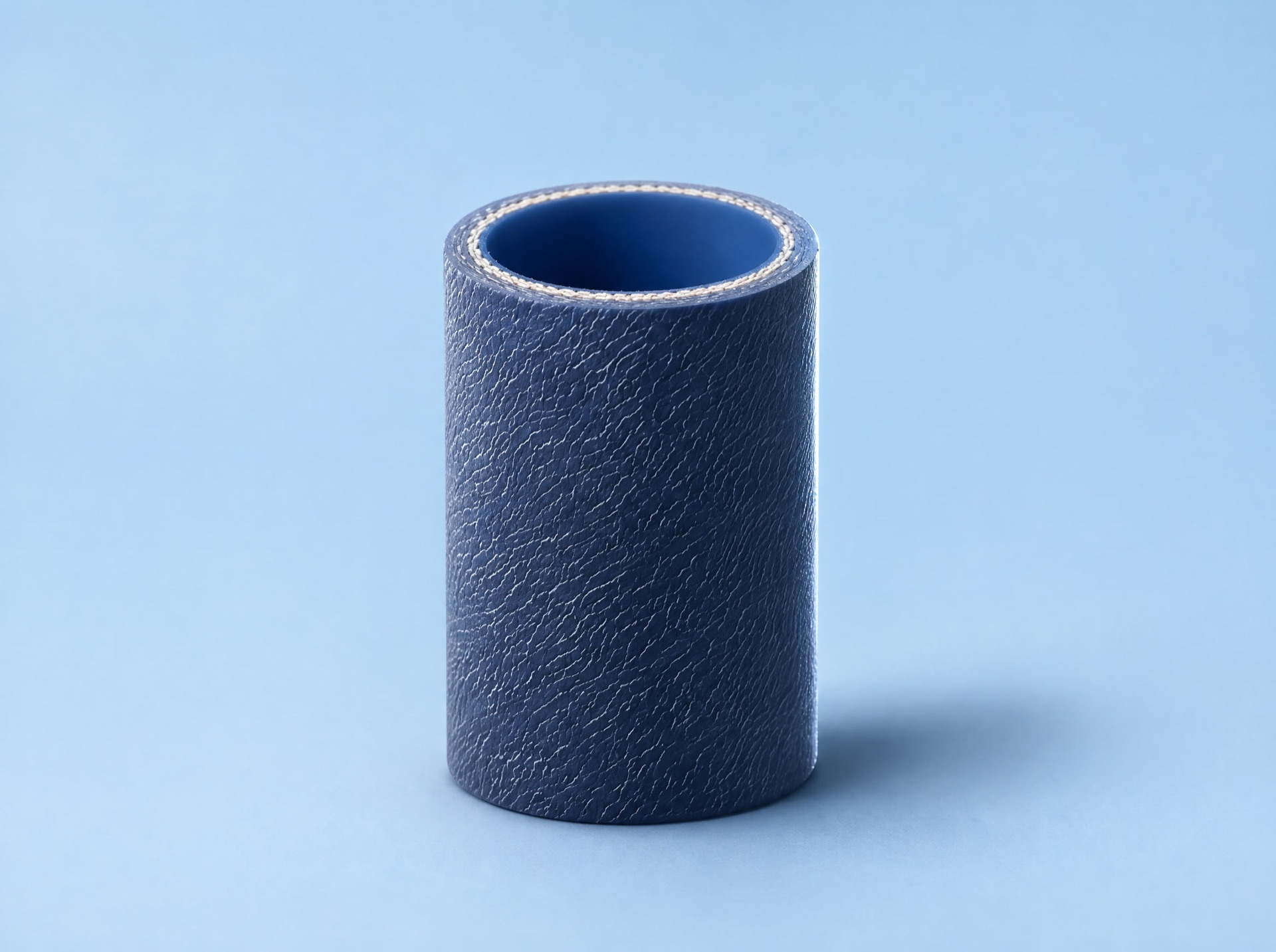
We have extended our sleeve range with silicone. The new grade complements our proven elastomers NR, NBR, EPDM, FPM, CR and CSM exactly where those reach their thermal limits. It is designed for our pneumatic pinch valves in hygienic and high-temperature applications and offers:
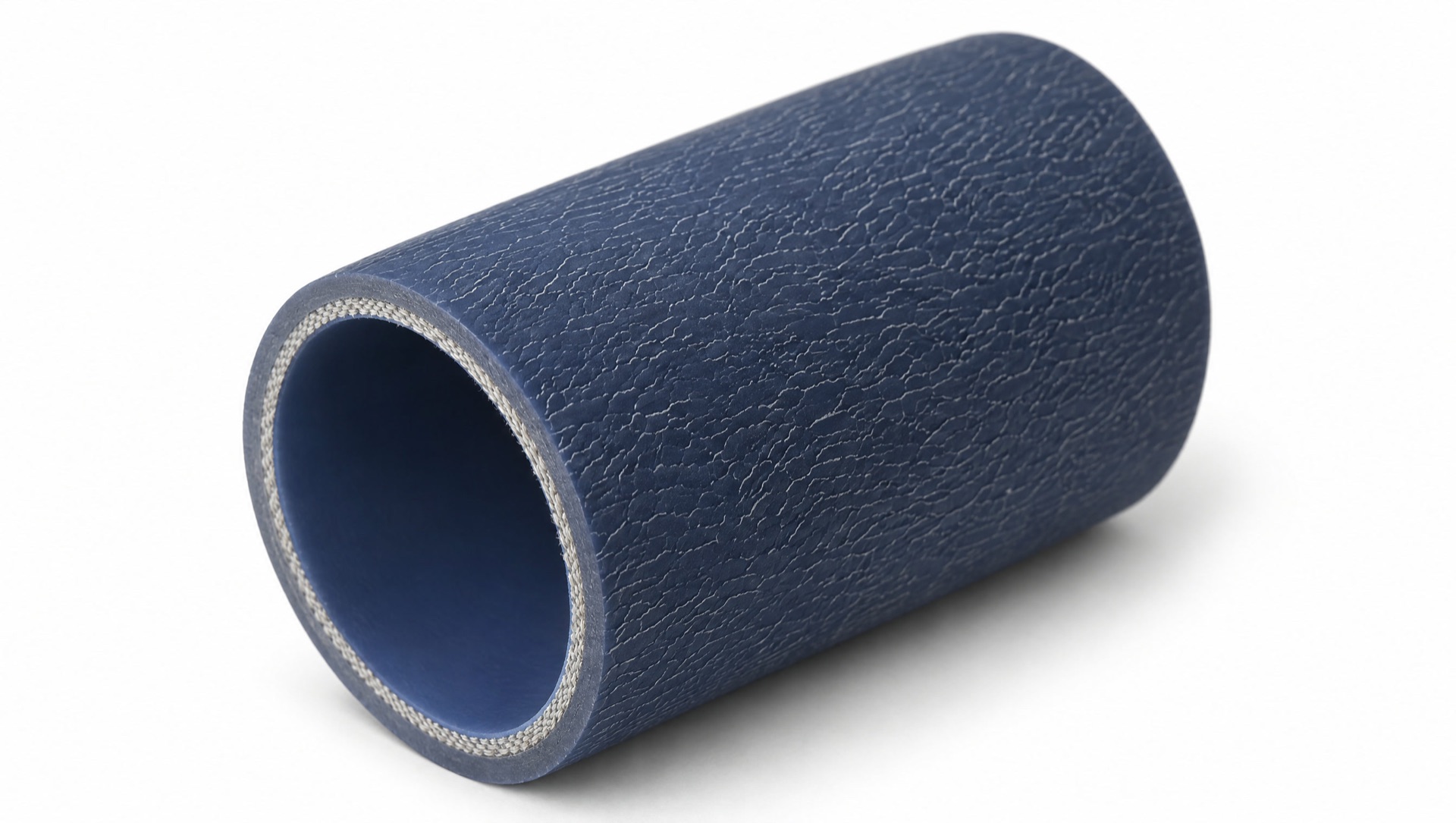
- High temperature resistance for hot filling, pasteurization and CIP and SIP processes
- A food-grade, blue quality with a smooth inner surface for residue-free cleaning
- Only one wetted component, meaning the material approval is limited to the sleeve
- Sleeve changes in a few minutes without special tools, on most series in place in the plant
Whether a switch is worthwhile depends on the medium, the temperature profile and the cleaning method. Our engineers assess your application and size the right grade. On request, we also design custom pinch valves for existing plants.
How Do You Choose the Right Sleeve Material for High Temperatures?
The maximum temperature of a silicone sleeve is a central criterion, but not the only one. These five questions quickly narrow down the right sleeve grade:
- Continuous temperature: What temperature is present in normal operation and what peaks occur during cleaning or sterilization?
- Medium: Oils and greases argue for NBR, aggressive solvents for FPM, abrasive bulk solids for NR.
- Cleaning: CIP with hot caustic and acid, or SIP with steam, calls for EPDM or silicone if it ranges above 120°C.
- Compliance: Food contact (FDA), pharmaceutical use (USP Class VI) or ATEX. In hazardous areas, a maximum temperature reduced by 20°C applies.
- Valve series: On QSV versions, lower limits apply to EPDM and FPM than in the standard valve.
As a rule of thumb, we work with a three-step rule for choosing a sleeve: up to +80°C NR or NBR, up to +120°C EPDM, above that silicone. If you are unsure which step your process reaches, it is worth looking at the actual temperature profiles of production and cleaning. Cleaning is often the hotter step.
Silicone Sleeve: The Answer to the 120°C Limit
As a material value, the maximum temperature of a silicone sleeve is around +200°C and therefore clearly above EPDM (+120°C), FPM (+100°C) and NR, NBR, CR and CSM (+80°C). Wherever hot filling, steam sterilization or hot cleaning media shape the process, silicone extends the service life of the sleeve and raises process safety, with full food-grade compliance.
With the new silicone grade, we at HO-Matic close the gap above 120°C in our sleeves. You benefit from Swiss manufacturing, short delivery times and the experience of 50 years of valve engineering.
Would you like to find out whether a silicone sleeve makes your high-temperature processes safer? Our engineering team will advise you on material, series and installation situation.
FAQ: Maximum Temperature of Silicone Sleeves
What Maximum Temperature Can a Silicone Sleeve Withstand in a Pinch Valve?
An HO-Matic silicone sleeve is approved up to +180°C, and briefly up to +250°C. The higher values that silicone reaches as a material do not apply in the valve, because the sleeve is loaded dynamically on every switching cycle. We define the application-specific maximum temperature of the silicone sleeve together with you.
At What Temperature Do Rubber Sleeves in NR, NBR or EPDM Fail?
In the HO-Matic pinch valve, NR and NBR sleeves are approved up to +80°C, FPM up to +100°C and EPDM up to +120°C. Above these values the organic rubbers age faster: they harden or soften, lose recovery force and no longer close reliably. For continuous operation above +120°C, silicone is therefore the only suitable elastomer grade.
Is a Silicone Sleeve Food-Grade?
Yes, silicone is available in food-grade qualities that meet the requirements of the FDA (21 CFR 177.2600) and EU Regulation 1935/2004. The material is neutral in taste and odor and gives off almost nothing to the medium. For HO-Matic silicone sleeves we supply the corresponding declarations of conformity on request.
Silicone or EPDM: Which Sleeve Material Is More Temperature Resistant?
Silicone is considerably more temperature resistant than EPDM: around +200°C against roughly +150°C as a material value, and in the valve the maximum temperature of a silicone sleeve sits clearly above the EPDM limit of +120°C. EPDM nevertheless remains the standard for CIP processes up to 120°C, because it is mechanically more robust and more resistant to concentrated acids and alkalis. Silicone is the choice once temperature becomes the limiting factor.
Can I Retrofit Existing Pinch Valves with a Temperature-Resistant Silicone Sleeve?
Yes. At HO-Matic the sleeve is the only wear part in a pinch valve and can be changed without special tools on almost every series. Switching to silicone requires no change of body. We check in advance whether series, nominal diameter and control pressure suit the new grade.
Which Pinch Valve Temperature Applies in ATEX Zones?
In ATEX zones, the maximum permissible temperature for the sleeve is 20°C below the standard value. An EPDM sleeve rated +120°C is therefore approved only up to +100°C in hazardous areas. ATEX-compliant sleeves at HO-Matic are electrically conductive and always black.
What Is a Silicone Sleeve Not Suitable For?
Silicone is not suitable for mineral oils, fuels and aromatic solvents, and is mechanically less abrasion resistant than natural rubber. For strongly abrasive bulk solids, NR remains the first choice, for oily media NBR and for aggressive chemicals FPM. Silicone plays to its strengths where temperature and hygiene govern the design.
How Long Does a Silicone Sleeve Last at High Temperatures?
Service life depends on process temperature, switching frequency, differential pressure and medium. There is no blanket figure in hours. What matters is the margin between the actual continuous temperature and the approved maximum temperature of the silicone sleeve: the larger the reserve, the longer the life. A correctly set control pressure of 2 to 2.5 bar above the operating pressure extends service life further.